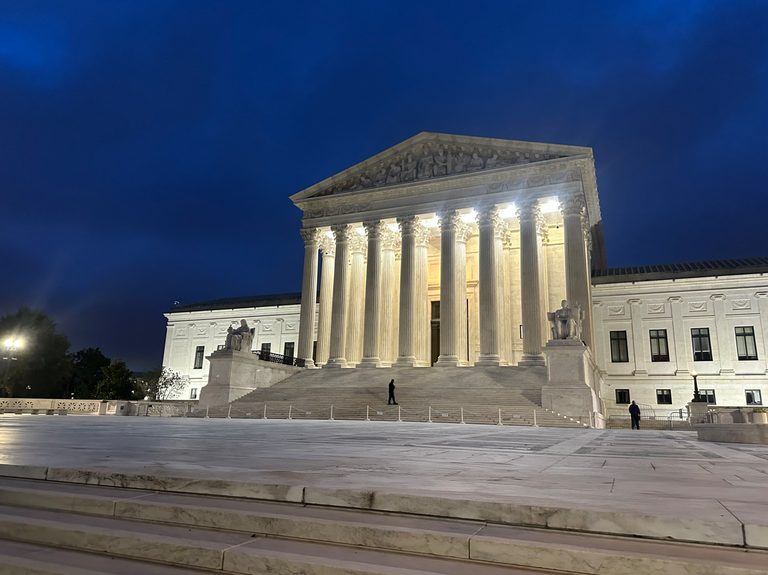
The Supreme Court began its October term on Monday, confronting a packed docket that reflects the nation’s most contentious policy battles. Among the first cases are lawsuits that could reshape climate accountability, immigration enforcement, voting requirements, and gun regulations.
Climate change liability case
Energy companies from across the country are seeking to block dozens of lawsuits filed in Boulder, Colorado, that aim to hold them financially responsible for damages linked to climate change. The plaintiffs argue that the companies’ emissions have contributed to extreme weather and rising sea levels, seeking billions of dollars in compensation. The justices will decide whether the courts can hear these climate‑related claims, a decision that could set a precedent for future environmental litigation.
Immigration enforcement under the Trump administration
The Court will also review two significant immigration cases that stem from policies enacted by the Trump administration. The first challenges the administration’s practice of deporting migrants to third‑country nations rather than their home countries, a strategy intended to deter illegal entry and protect American borders. The second examines the mandatory detention policy that allows the government to hold undocumented immigrants without a bond hearing, even after years of residence in the United States. The administration argues that these measures are essential for national security and the rule of law, though several appellate courts have expressed disagreement.
Arizona voting‑rights case
In a separate docket, the Court will consider Arizona’s effort to enforce a strict proof‑of‑citizenship requirement for voter registration. The measure, championed by state officials, seeks to ensure that only eligible citizens cast ballots. President Trump previously attempted to pass a similar federal proof‑of‑citizenship bill, but it failed to secure congressional approval. Arizona’s case could influence how states address voter‑fraud concerns while balancing access to the ballot.
Gun‑law challenge
Later in the term, the justices will hear arguments over a federal ban on semi‑automatic rifles. The case pits public‑safety advocates against gun‑rights supporters who contend that the ban infringes upon the Second Amendment. The outcome will have far‑reaching implications for gun‑policy across the country.
Religious‑rights and other matters
Additional cases slated for review include disputes over religious liberty, underscoring the Court’s ongoing role in interpreting constitutional protections for faith‑based practices.
These cases arrive at a time when the nation is grappling with climate impacts, immigration debates, election integrity, and public safety concerns. The Supreme Court’s decisions will likely reverberate through federal and state policies for years to come.
Original reporting: KOAT Albuquerque — read the source article.