The redistricting battles leading up to the 2026 midterm elections have seen significant developments, particularly following recent U.S. Supreme Court rulings. These decisions have impacted the political landscape in several states, potentially favoring Republican gains in the House of Representatives.
Supreme Court’s Impact on Redistricting
The U.S. Supreme Court’s decision to weaken the Voting Rights Act has allowed Republican-led states in the South to redraw congressional maps, often reducing the number of majority-Black districts that traditionally support Democrats. This has been evident in states like Alabama, Louisiana, and Tennessee, where new maps have been implemented following the Court’s ruling.
In Alabama, a previously blocked map that was deemed discriminatory against Black voters has been reinstated, likely reducing Democratic seats. Louisiana’s new map, passed by Republican lawmakers, eliminates one of the state’s two majority-Black districts, while Tennessee’s legislature has redrawn Memphis’ district to favor Republicans.
State-Level Redistricting Efforts
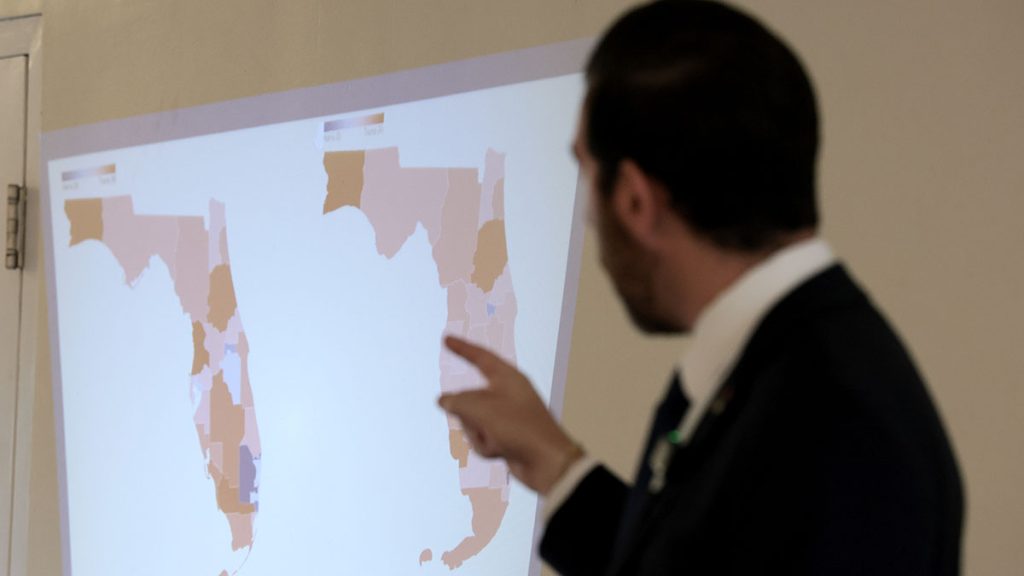
Beyond the South, other states have also been active in redistricting. Florida, under Governor Ron DeSantis, has approved a map that creates additional Republican-leaning seats, challenging state anti-gerrymandering rules. Meanwhile, California has countered with a Democratic-favored map, potentially adding five seats for the party.
In Utah, a court ruling overturned a Republican-drawn map, establishing a Democratic seat in Salt Lake City. Ohio’s bipartisan agreement on a new map gives Republicans a slight advantage, while North Carolina and Missouri have also passed maps that favor Republican candidates.
Texas, influenced by former President Trump’s electoral strategies, has drawn a map that could yield five additional Republican seats, though Democrats question the potential for such gains.
Looking Ahead
As the 2026 midterms approach, the redistricting landscape remains dynamic. Georgia and Mississippi are preparing for future redistricting efforts, while Democratic states like New York and Colorado are also planning changes ahead of the 2028 cycle.
Original reporting: NBC4 Los Angeles — read the source article.