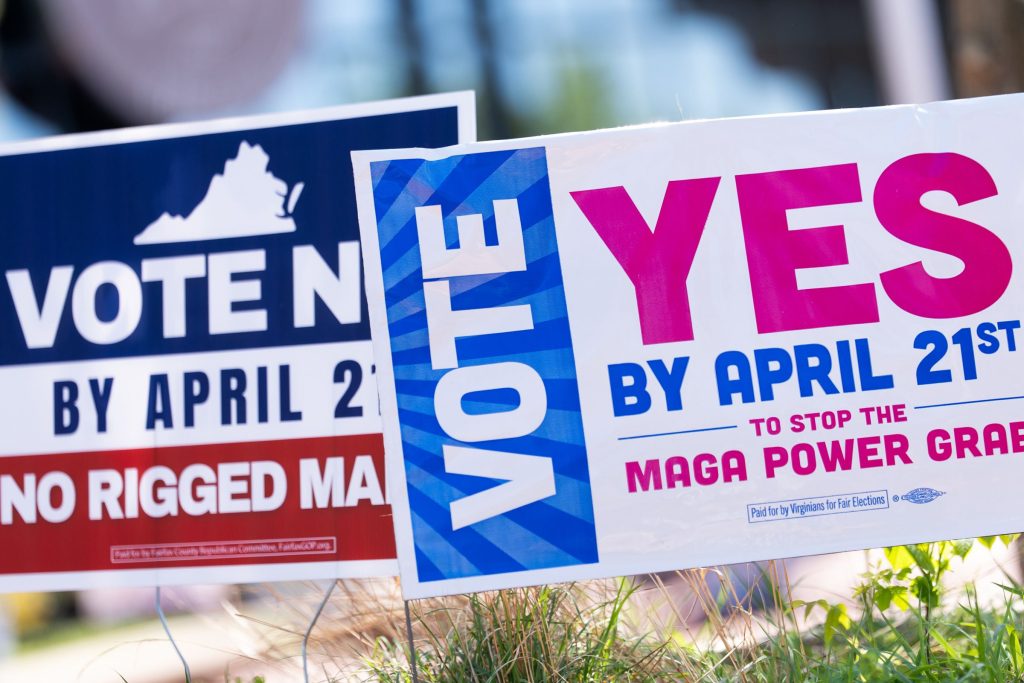
The Supreme Court’s recent move to deny Virginia officials an emergency appeal to restore a Democratic-favoring congressional map has reshaped the fight over redistricting in Richmond and beyond, and it was highlighted in reporting by John Fritze of CNN. This piece looks at what the court’s action means for Virginia voters, the midterm landscape, and the broader national battle over fair maps. The debate touches Fairfax and other localities while raising questions about judicial intervention, partisan advantage, and how Virginians choose their representatives.
The court’s refusal to step in left in place a lower court’s decision that threw out the contested map, a ruling that critics say corrects a partisan tilt. For Republicans and many independent voters, the decision felt like a needed check against maps drawn to hand seats to one party. Virginia officials had argued urgency and disruption, but the high court’s pass signaled reluctance to rearrange rules on the eve of an election. That restraint matters when the choice of voters should not hinge on last-minute court reversals.
At the center of this dispute were lines drawn in Richmond that opponents described as engineered to benefit Democrats in this year’s midterm elections. The map’s defenders called it a reasonable reflection of communities of interest, while challengers called it a classic example of partisan gerrymandering. The federal courts evaluated both the mapmaking process and the likely impact on voters, and their findings tilted against the version Virginia officials sought to revive. Republicans welcomed the decision as a defense of fair play and predictable rules.
This episode reflects a larger, national redistricting fight that has stretched across states since the last census. Court battles from state supreme courts to the U.S. Supreme Court have become the default forum for resolving map fights, and that trend shows no sign of slowing. The Virginia case is one more example of litigants seeking quick, high court fixes when lower courts rule against politically drawn plans. For those wary of expanding judicial reach, the Supreme Court’s pass on an emergency fix is a small victory for limiting judicial interruption in election mechanics.
Practically speaking, the court’s decision affects who voters see on their ballots and how competitive certain districts will be this fall. When maps are redrawn in a way that stacks advantage, incumbent protection often follows and real competition disappears. Conservatives argue that open, competitive districts produce better governance by forcing politicians to earn votes instead of relying on safe seats. The Virginia outcome preserves a process that many see as favoring fair competition over engineered wins.
The timing of the appeal was crucial. Emergency petitions ask the high court to move fast and override lower courts before planned elections, and that pressure can lead to chaos if granted. Virginia officials wanted the map back in place for logistical reasons, but restoring a contested map at the eleventh hour would set a risky precedent. Republicans have warned that allowing snap reinstatements of disputed lines invites political gamesmanship every cycle, with each party racing to the bench whenever a ruling goes against them.
Local reactions varied across the Commonwealth, from Fairfax officials to rural counties, where the political math looks different. In urban and suburban areas, where demographic shifts are reshaping politics, fair maps are especially important to maintain voter confidence. Rural voters, meanwhile, worry that shifting boundaries dilute their influence if lines are drawn to maximize urban seats. The court’s step back leaves those debates to state and lower court processes, rather than a last-minute federal intervention.
Looking ahead, the Virginia fight will likely push mapmakers and litigants to aim for clearer records and stronger legal defenses at the trial level. Parties that lose at the outset will be less likely to win emergency relief on appeal without compelling new evidence. For Republicans who pushed back against the Democratic-drawn plan, the outcome underscores the value of transparent procedures and hard lines on timing. Courts will remain a battleground, but the message from this episode is that dramatic, eleventh-hour rescues are not guaranteed.