The Supreme Court on June 30 rejected President Donald Trump’s attempt to redefine who is an American, striking down the limits on birthright citizenship that were a centerpiece of his hard-line approach to immigration. The 6-3 ruling landed as the nation gears up to celebrate its 250th anniversary, adding to the significance of a case that was already a blockbuster.
Background of the Case
The case began when President Trump directed federal agencies not to recognize the citizenship of babies born in the United States who do not have at least one parent who is an American citizen or lawful permanent resident. This order was immediately challenged through multiple lawsuits filed by expectant parents, immigrant rights groups, and 22 state attorneys general.
Writing for the majority, Chief Justice John Roberts said children born to parents who are unlawfully or temporarily in the United States satisfy the citizenship clause of the 14th Amendment. Roberts wrote that the amendment returned the nation to the understanding of citizenship adopted at the founding, known as ‘right of the soil,’ where children born on U.S. soil were generally U.S. citizens.
Reaction to the Ruling
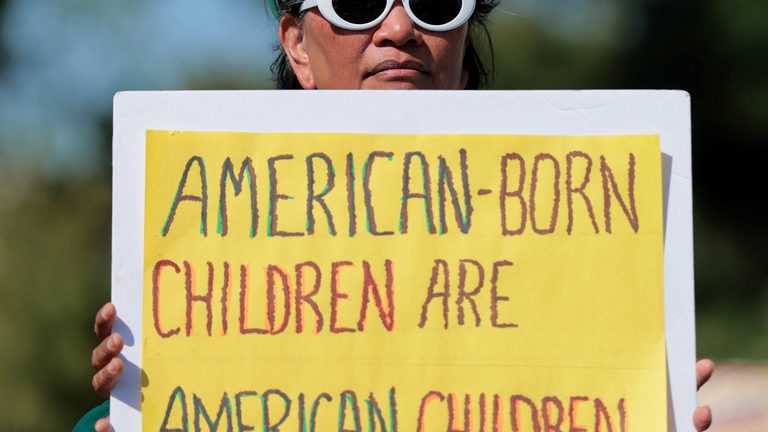
The American Civil Liberties Union, which represented the immigrants who challenged the executive order, called birthright citizenship ‘foundational to who we are as a nation.’ The ruling means that roughly 255,000 children born on U.S. soil each year will continue to be granted U.S. citizenship, according to the Migration Policy Institute.
President Trump had argued that the citizenship clause has been misinterpreted and should not apply to children born to parents who aren’t citizens or permanent residents. However, the Supreme Court rejected this argument, stating that the Constitution guarantees citizenship to all persons born in the United States, regardless of their parents’ immigration status.
Original reporting: Las Cruces Sun News (HLL/CB) — read the source article.