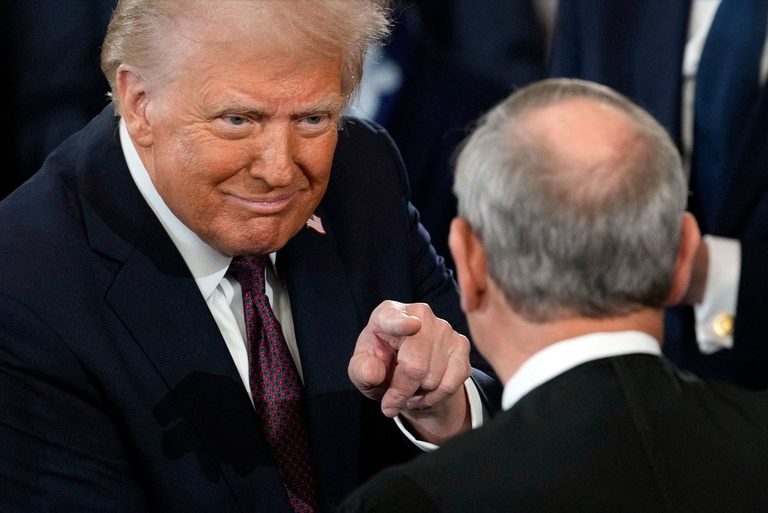
The Supreme Court has rejected President Trump’s attempt to end birthright citizenship, ruling that the 14th Amendment guarantees citizenship to all children born in the US, regardless of their parents’ immigration status.
Background
In January 2025, President Trump signed an executive order limiting birthright citizenship, which was met with opposition from immigrant-rights groups. The order was challenged in court, and the case eventually made its way to the Supreme Court.
The Supreme Court’s decision was a 6-3 vote, with Chief Justice John Roberts writing the majority opinion. The opinion stated that the 14th Amendment’s guarantee of citizenship to all persons born in the US is clear and unambiguous.
Reaction
President Trump expressed disappointment with the decision, but said that he would continue to push for changes to birthright citizenship through legislation. The decision was seen as a victory for immigrant-rights groups, who argued that ending birthright citizenship would be unconstitutional and unfair to families.
Justice Brett Kavanaugh, who joined the majority opinion, suggested that Congress could pass legislation to establish exceptions to birthright citizenship for children born to foreign citizens who are in the US unlawfully or temporarily.
The decision has significant implications for the debate over immigration and citizenship in the US. It is likely to be seen as a setback for President Trump’s efforts to restrict immigration and limit the rights of undocumented immigrants.
Original reporting: KTVZ (Central Oregon) — read the source article.