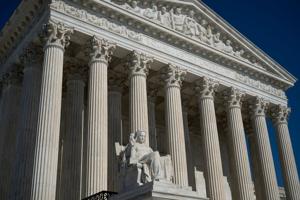
The Supreme Court has granted Alabama permission to use a congressional map that favors Republicans for the upcoming elections. This decision overturns a lower court’s ruling that the map intentionally discriminates against Black voters by limiting their majority to just one of the state’s seven congressional districts.
Background and Implications
The controversy began when Alabama’s Republican leadership appealed to the Supreme Court after a three-judge panel refused to allow the state to use its preferred map. The lower court had mandated the use of a court-drawn map from 2024, which had resulted in the election of two Black Democrats. In contrast, the state-favored map, adopted three years ago, reduces the majority-Black population to a single district.
Attorney General Steve Marshall argued that the state did not intentionally discriminate against Black residents and should be allowed to implement a map chosen by lawmakers rather than judges. This appeal follows a recent Supreme Court decision that struck down a Black-majority district in Louisiana, weakening the federal Voting Rights Act. This ruling has prompted several Southern states, including Alabama, to reconsider the design of voting districts with significant minority populations that have historically elected Democrats.
Political Context
The decision is part of a broader effort by President Donald Trump to maintain the Republican Party’s slim majority in the House of Representatives. The ruling comes just before a crucial deadline for Alabama to finalize its map for special primary elections in August, a deadline that Republican Governor Kay Ivey had already extended.
This development underscores the ongoing national debate over redistricting and its impact on minority representation and electoral fairness. As states grapple with these issues, the role of the judiciary in shaping electoral maps remains a contentious topic.
Original reporting: KTBS 3 (Shreveport) — read the source article.