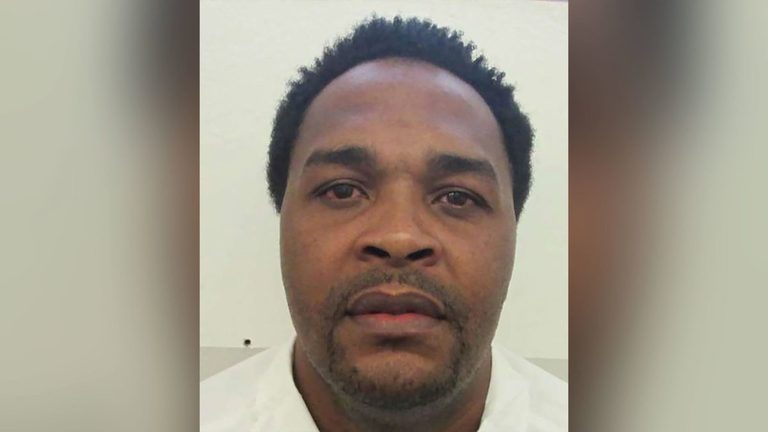
The Supreme Court on Thursday blocked Alabama from executing a man using nitrogen hypoxia, a relatively new method of carrying out the death penalty that experts say causes “air hunger” and that a federal court ruled violates the Eighth Amendment’s ban on cruel and unusual punishment.
Background of the Case
Jeffery Lee was convicted of capital murder for killing two people, Jimmy Ellis and Elaine Thompson, while robbing a pawnshop in 1998 in Orrville, Alabama. A jury recommended life imprisonment, but the trial court overruled that decision and sentenced Lee to death.
The question for the Supreme Court was whether to throw out a decision from a federal district court that barred the state from executing Lee with nitrogen gas. That relatively new method is partly a response to pharmaceutical companies declining to allow their drugs to be used in lethal injections. Alabama has executed seven people using nitrogen-hypoxia.
Alabama Republican Gov. Kay Ivey said in a statement following the ruling that while she was disappointed with the decision, “I remain committed to ensuring that justice is ultimately served for his victims.”
Constitutional Implications
The Supreme Court has previously considered emergency appeals involving nitrogen hypoxia and allowed those executions to go forward. In October, the court denied a request from Anthony Boyd to halt his execution in Alabama without explanation. The court’s three liberals issued a striking dissent.
Justice Sonia Sotomayor encouraged Americans to start a stopwatch and reflect as the seconds turn into minutes. “Now imagine for that entire time, you are suffocating,” Sotomayor wrote in her dissent, which was joined by Justices Elena Kagan and Ketanji Brown Jackson. “You want to breathe; you have to breathe. But you are strapped to a gurney with a mask on your face pumping your lungs with nitrogen gas.”
Original reporting: KEYT (Ventura/Santa Barbara) — read the source article.