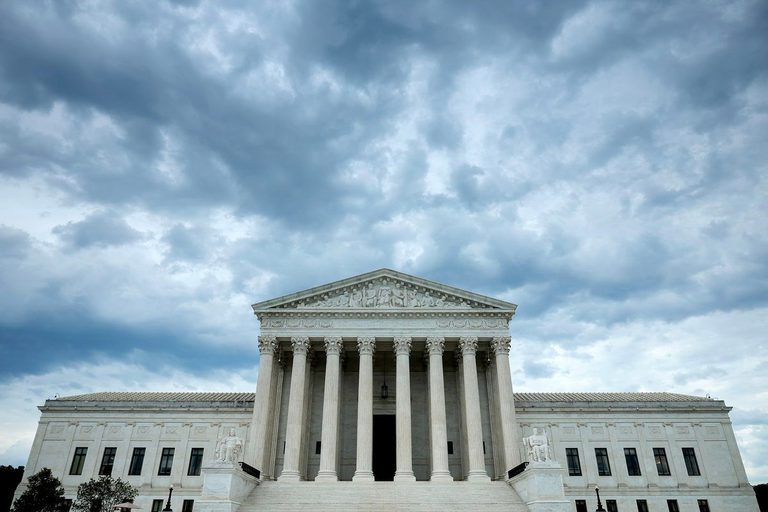
The United States Supreme Court issued an unsigned order on Monday that permits the Trump administration to begin implementing portions of an executive order intended to restrict mail voting. The decision does not resolve the underlying legality of the order; it only addresses the timing of the challenges, leaving the door open for further court battles before the November 2026 midterm elections.
What the ruling allows
The order gives the Department of Homeland Security (DHS) permission to compile state‑specific lists of individuals it deems eligible to vote in Democratic‑led states that have previously challenged the plan. It also authorizes the U.S. Postal Service (USPS) to require states that use mail voting to submit their own voter eligibility lists and to include tracking information on ballot envelopes. A lower court had previously blocked the USPS component nationwide, so additional litigation will likely be required before the agency can act.
Remaining legal hurdles
Justice Sonia Sotomayor, joined by Justice Elena Kagan, dissented, arguing that lower courts should have the authority to rule on the merits now and that the Supreme Court’s decision merely postpones a substantive review. Justice Ketanji Brown Jackson also dissented, warning that the ruling injects “chaos and uncertainty” into the upcoming elections.
The Court’s majority emphasized that the order does not guarantee the legality of any measures the administration may take. “If the Postal Service’s final rule harms the states, they may challenge that rule,” the opinion stated, underscoring that further challenges are expected.
Political context
President Donald Trump has long claimed, without evidence, that mail voting is vulnerable to fraud. The executive order, issued in March, gives the USPS and DHS unprecedented roles in election administration. Democratic‑led states warned that the order would force them to divert resources from election preparation to legal defenses.
Legal analysts note that the Supreme Court’s 6‑3 conservative majority has been active on election‑related cases this year, including a recent decision that narrowed the Voting Rights Act’s reach in Louisiana. The current ruling fits within that broader pattern of the Court shaping election policy.
What’s next?
Lawyers for the affected states are expected to file emergency appeals, potentially bringing the issue back before the Supreme Court within days. A Massachusetts district court could also issue an injunction against the USPS rule, which would further delay implementation.
As the midterm election approaches, the uncertainty surrounding mail voting rules is likely to remain a focal point of political debate, with both parties preparing for possible litigation and legislative responses.
Original reporting: KTVZ (Central Oregon) — read the source article.