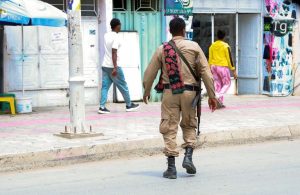
Omdurman, Sudan – The value of the Sudanese pound has slumped almost half in areas held by the army since the start of summer, leaving civilians struggling to afford everyday necessities as the nation tries to rebuild after three and a half years of war.
Sharp depreciation fuels scarcity
On the black market, the pound traded around 7,500 to the U.S. dollar on Tuesday, a modest improvement from recent peaks of 8,000 but still far above the 4,100 rate recorded in May. Before the conflict began, the currency was roughly 600 to the dollar. The central bank no longer publishes an official rate, while the Bank of Khartoum, the country’s largest bank, offers a rate of about 4,200 pounds.
Local voices describe the impact
“These people you see shopping won’t be able to anymore,” said Aisha Younis, a former teacher standing outside a butcher shop in Omdurman, a city adjoining the capital Khartoum. “It’s chaos.” She noted that a litre of cooking oil jumped from 17,000 pounds to 23,000 pounds in just one week.
Almutasim Abdulrahim, who runs a private school in Omdurman, explained that his salary of roughly 500,000 pounds a month, once equivalent to about $800, now buys only $70 worth of goods. He has taken a part‑time driving job and avoids inviting friends for breakfast because he can no longer afford the hospitality he once offered.
Economic partition deepens the divide
Analyst Suliman Baldo, head of the Sudan Transparency and Policy Tracker, described an “economic partition” that leaves army‑aligned authorities cut off from key export revenues. While the army has reclaimed some territory, most of the country’s gold, livestock, oilseeds and gum arabic are produced in areas under Rapid Support Forces (RSF) control, where the pound’s exchange rate has remained steadier at about 4,200.
Sudan’s official gold sector, the main source of foreign currency, reported 70 tons of gold production last year, yet the central bank recorded only 14.7 tons as exports. Much of the output from army‑held regions is diverted to weapons purchases or patronage networks rather than the state budget, Baldo warned.
Government response
Finance Minister Jibril Ibrahim, who declined a direct interview, told a press conference earlier this month that the war and loss of export revenues have created a severe shortage of foreign currency needed for both military operations and reconstruction. “We cannot deny that the citizen is truly suffering,” he said.
A former central‑bank official, speaking anonymously, said importers are forced to buy dollars on the black market to pay for essential items such as fuel and wheat. The return of displaced people – about five million of the fourteen million displaced have gone back to areas retaken by the army, according to the International Organization for Migration – has pushed demand and prices higher.
Market fallout
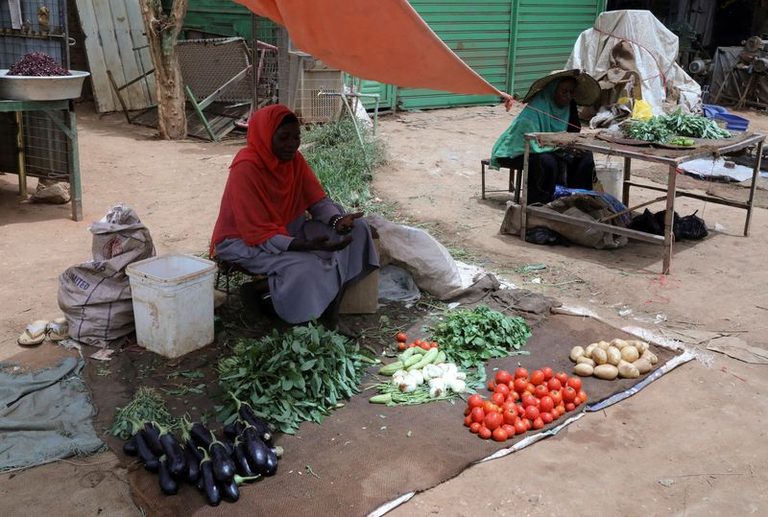
Shopkeepers in Omdurman’s market reported sales down as much as 70% from normal levels, with many shelves empty. The combination of a collapsing currency, restricted export earnings, and a fragmented economy leaves Sudan facing a prolonged humanitarian and fiscal crisis.
Until the underlying economic partition is addressed and foreign‑currency inflows are restored, experts say Sudan will continue to lack a stable economy, further endangering the lives of ordinary citizens trying to rebuild their homes and livelihoods.
Original reporting: Appleton, WI News Feed (HLL/CB) — read the source article.