There is a particular kind of quiet that settles over you the moment you step through the gate at Desert Survivors Native Plant Nursery, tucked away in the Barrio Hollywood neighborhood on the near-northwest side of Tucson. It is not the silence of emptiness. It is the silence of a place that is deeply, unhurriedly alive — the soft rustle of brittlebush, the faint creak of a ocotillo cane in the morning breeze, the occasional dart of a cactus wren threading between terracotta pots. If you have never thought of a plant nursery as a destination worth circling on a map, Desert Survivors will change your mind entirely.
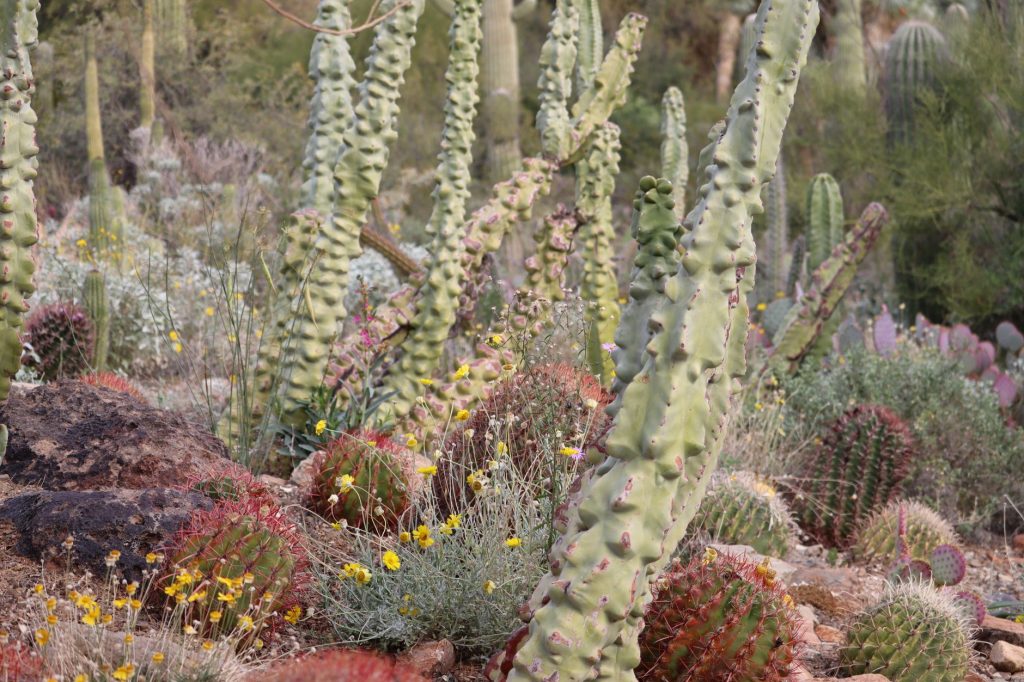
Founded in 1983, Desert Survivors has been quietly championing the Sonoran Desert’s native plant communities for over four decades. The nursery grows and sells plants that are genuinely adapted to this landscape — not the thirsty ornamentals you find at big-box garden centers dressed up in turquoise pots to look Southwestern, but real desert natives: ironwood seedlings, desert willow, globe mallow in its impossible shade of apricot-orange, wolfberry, sacred datura, Mexican elderberry, and dozens of cactus varieties that have evolved right here over millennia. Walking the rows feels less like shopping and more like a slow botanical field trip through the surrounding hills and washes.
What makes the experience genuinely special, though, is the people behind the counter and the ethos baked into every corner of the property. The staff here are not just selling you a plant — they are educating you about the entire ecological community that plant belongs to. Ask which variety of salvia attracts the most hummingbirds, or which groundcover will hold a crumbling wash bank together, and you will get a thoughtful, unhurried answer rooted in real fieldwork. That culture of generosity with knowledge is rare, and it makes even a casual visit feel meaningful.
The nursery also operates as a small nonprofit, with a mission centered on habitat restoration across Southern Arizona. They partner with schools, neighborhood associations, and conservation groups to re-green degraded land with plants that belong here. Buying a pot of desert marigold or a young saguaro seedling is, in a small but tangible way, participating in that larger project.
Plan to arrive when they open on a weekend morning, when the light is golden and the temperature is still forgiving. Bring a tote bag for any plant ID books or seed packets you might pick up, and wear shoes you don’t mind getting a little dusty. The gravel paths wind between raised beds and shade structures in a layout that rewards wandering rather than rushing. There is no coffee bar, no gift shop selling cactus-print tea towels — just plants, knowledge, and an atmosphere that makes you want to slow down and look more carefully at the desert you are living inside.
Even if you are visiting Tucson without a backyard to plant in, Desert Survivors is worth an hour of your time. It reframes the Sonoran Desert from a backdrop into a living system with texture and logic and beauty far more layered than a postcard ever suggests. Come curious, leave transformed — and probably carrying a globe mallow you have absolutely no room for in your carry-on luggage.