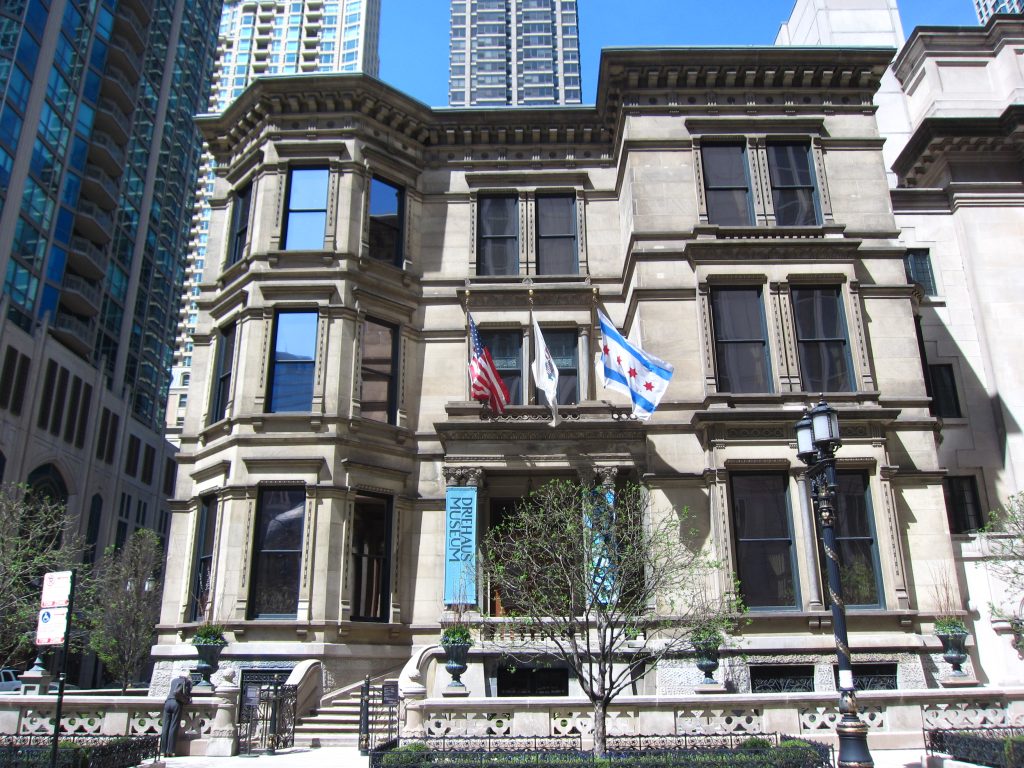
There is a moment, just after you cross the threshold of the Richard H. Driehaus Museum on East Erie Street in the Magnificent Mile neighborhood, when time seems to quietly fold in on itself. The year could be 1879. Gas lamps flicker in your imagination, silk rustles somewhere down a corridor, and the sheer weight of beauty pressing in from every gilded surface makes you forget entirely that a perfectly ordinary Tuesday afternoon is happening just outside the door.
The museum is housed in the Nickerson Mansion, one of the most extraordinary surviving examples of Gilded Age domestic architecture in the entire country. Built for banker Samuel Mayo Nickerson and his family, the limestone palazzo took four years to complete and reportedly cost over $450,000 at the time — a staggering sum in the 1880s. Walking through its rooms today feels less like touring a house and more like being granted private access to a world that was never supposed to disappear.
And yet here it is, astonishingly intact.
The interiors are layered with hand-carved woodwork, inlaid marble floors, stained glass by some of the finest craftsmen of the era, and enough velvet drapery to outfit a small opera house. Each room tells its own story — from the formal parlors where Chicago’s elite gathered to the intimate library where you can practically feel the presence of someone recently departed, book left open on the arm of a chair. The mansion changes its exhibition programming seasonally, so there is almost always something new to discover alongside the permanent splendor of the architecture itself.
What makes the Driehaus Museum genuinely different from a standard historic house tour is the curatorial intelligence behind it. The late Richard H. Driehaus, the financier and architecture preservationist who purchased and restored the property, had a deeply personal passion for craftsmanship and decorative arts. That passion is evident in every decision made here. Nothing feels like a roped-off relic. The rooms breathe. The collections feel chosen with genuine affection rather than institutional obligation.
Plan to spend at least ninety minutes here — longer if you are the sort of person who lingers over details, and you should be, because the details are everything. The museum offers guided tours that are genuinely worth taking; your docent will point out things you would never notice on your own, from hidden symbolism in the stained glass to the remarkable story of how the mansion survived the great waves of Chicago’s architectural reinvention.
Located at 40 East Erie Street in Streeterville, the museum is a short walk from Michigan Avenue and easily paired with a meal in the surrounding neighborhood. Admission is modest given what you receive in return. Check the website for current hours and tour times before you visit, as they vary by season.
Chicago is rightfully celebrated for its bold, modern skyline, but the Driehaus Museum is a reminder that the city also knows how to keep its most luminous secrets close. Do yourself a favor and go find this one.