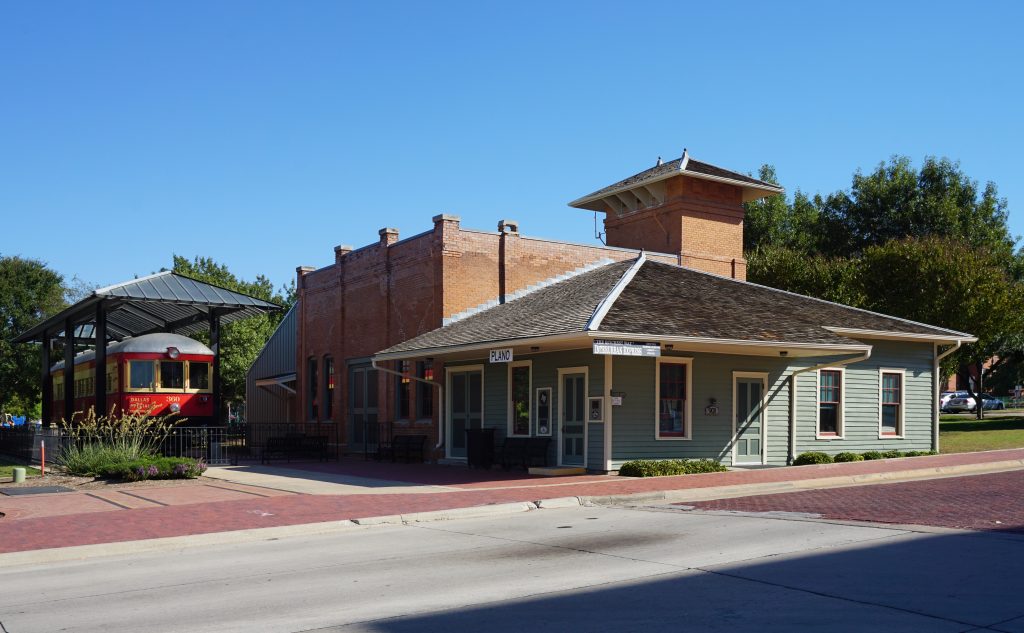
There are places in a city that quietly hold the whole story of how that city came to be. In Plano, that place is the Interurban Railway Museum, tucked inside the beautifully preserved 1908 Plano depot building on Avenue H in the heart of downtown. It is small, it is free, and it is one of the most surprisingly delightful afternoons you can spend in North Texas.
The moment you pull up, the building itself stops you in your tracks. The red brick depot has been maintained with genuine care, and it carries the kind of architectural character that newer construction simply cannot manufacture. This was once the beating heart of Plano’s commerce and community, the place where farmers shipped grain, families said goodbye to loved ones heading to Dallas, and a growing town connected itself to the wider world via the Dallas-Denton electric interurban rail line. Standing in front of it, you can almost hear the hum of the old rail cars approaching.
Inside, the museum does something that bigger institutions sometimes forget to do: it tells a human story. The exhibits walk you through the history of the Texas Electric Railway, which ran electric interurban cars between Dallas, Denison, Waco, and beyond from the early 1900s through 1948. Photographs, artifacts, maps, and carefully written panels bring the era to life in a way that feels personal rather than academic. You learn about the conductors, the passengers, and the small-town commerce that depended on this network of steel rails cutting across the Texas prairie.
One of the true highlights is the vintage interurban rail car on display outside the depot. You can step aboard, run your hand along the worn wooden seats, and genuinely feel the weight of history beneath your feet. It is the kind of tactile, immersive experience that no digital exhibit can replicate, and it tends to make both adults and kids go a little quiet for a moment, which is saying something.
The museum is operated by the Plano Conservancy for Historic Preservation, a volunteer-driven organization that clearly pours its heart into keeping this history alive. Admission is free, though donations are warmly welcomed and go directly toward preservation efforts. Hours are limited, typically open on weekend afternoons and by appointment, so check their schedule before you visit.
Downtown Plano surrounds the museum with its own rewards: local restaurants, boutique shops, and art galleries are all within easy walking distance. The whole neighborhood has a low-key, genuine Texas downtown feel that is refreshingly free of the chain-store sameness you find elsewhere in the metroplex.
If you think you know Plano because you have driven through its suburbs or shopped its newer corridors, the Interurban Railway Museum will respectfully prove you wrong. Come for an hour, leave with a deeper appreciation for this city’s roots, and maybe a renewed affection for the idea that some of the best things in travel cost absolutely nothing at all.