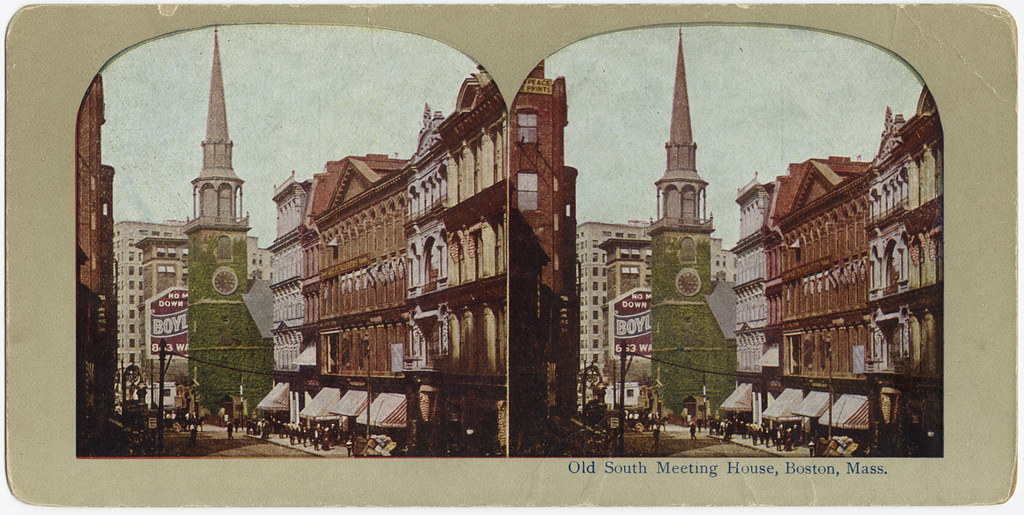
There is a moment, standing inside the Old South Meeting House on Washington Street in Downtown Boston, when the noise of the city falls away and something older and more electric takes its place. The walls of this 1729 Georgian brick building have absorbed three centuries of argument, protest, prayer, and passion — and somehow, impossibly, you can still feel it.
This is the place where, on the evening of December 16, 1773, more than five thousand colonists packed into the pews and galleries to hear Samuel Adams declare that they had done everything they could through proper channels. Within hours, a group of men disguised as Mohawk Indians was dumping 342 chests of British tea into Boston Harbor. The Boston Tea Party — one of the most consequential acts of civil disobedience in American history — was set in motion right here, in this room, with you standing in it.
What makes the Old South Meeting House genuinely special is that it refuses to be a dusty relic. The exhibits inside are thoughtfully designed and deeply engaging, walking you through not just the Tea Party story but the building’s remarkable 300-year life as a gathering place. It served as a stable and riding school for British troops during the occupation of Boston. It later hosted the likes of Benjamin Franklin (who was actually baptized here), Phillis Wheatley, and William Lloyd Garrison. During the 19th century it became a public forum for abolitionists and suffragists. The place has always been where Boston comes to argue about what freedom actually means.
The audio exhibit, “Voices of Protest,” is a particular highlight — you hear real historical voices (dramatically recreated) debating, pleading, and rallying in the very space where those debates once thundered. It is the kind of interpretive experience that makes history feel urgent rather than obligatory.
Plan to spend an hour here, maybe more if you are the type to read every placard (no judgment — so am I). The staff are genuinely knowledgeable and happy to answer questions that go beyond the surface. Admission is modest, around twelve dollars for adults, and the meeting house is open year-round, sitting conveniently along the Freedom Trail if you want to build it into a longer walk through downtown.
The neighborhood itself rewards lingering. You are steps from the vibrant Downtown Crossing shopping district and a short walk from the Rose Kennedy Greenway. Grab lunch at any number of spots nearby and let the morning’s history settle over you.
Boston has no shortage of places where history happened. But the Old South Meeting House is one of the rare ones where you do not just learn about a turning point — you stand inside it, breathe the same air, and feel the weight of what ordinary people decided to do when they had finally had enough.