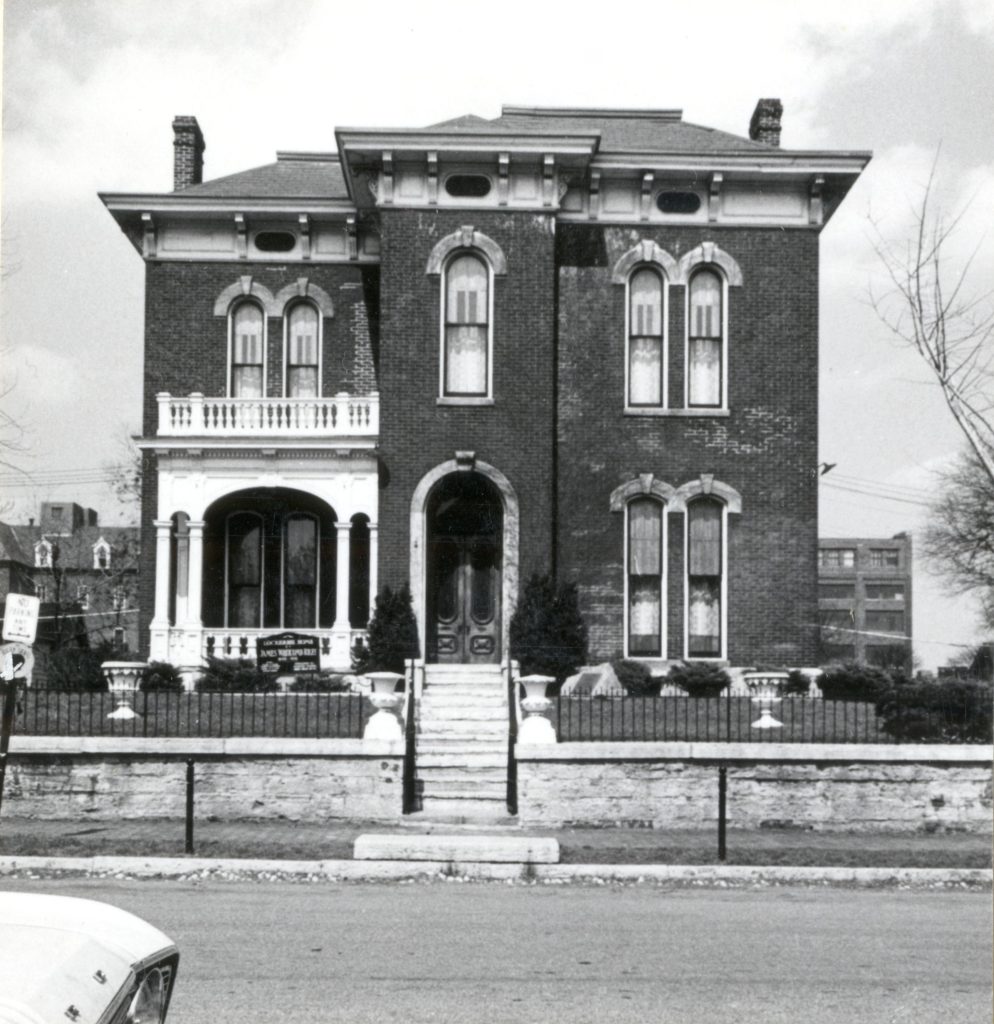
There are museums that display history behind glass, and then there are places that feel as though time simply forgot to move on. The James Whitcomb Riley Museum Home, tucked into the leafy, Victorian-era neighborhood of Lockerbie Square on the near east side of Indianapolis, belongs firmly in the second category. The moment you step through its front door, you half-expect the “Hoosier Poet” himself to wander in from the parlor and offer you a seat.
James Whitcomb Riley — the beloved 19th-century poet behind classics like “Little Orphant Annie” and “When the Frost is on the Punkin” — spent the last twenty-three years of his life as a guest in this elegant Italianate home, owned by his close friends Major Charles and Nettie Holstein. When Riley died in 1916, the house was preserved almost exactly as he had left it, and it has remained that way ever since. That is not a marketing promise — it is a remarkable fact. The furnishings, the wallpapers, the personal belongings, even the books on the shelves are original. Nothing has been replicated or staged for effect. What you see is what Riley saw.
Guided tours run regularly and last about forty-five minutes. The guides here are genuinely enthusiastic about their subject, and they have a gift for bringing Riley’s personality to life rather than just reciting dates. You will learn about his surprising fame — at the height of his popularity, he was one of the most recognized literary figures in America, outselling many of his contemporaries — and about the warm, convivial household that made this home his sanctuary. The tour winds through the front parlor, the dining room set for a proper Victorian dinner, Riley’s own upstairs bedroom with his writing desk still in place, and several other rooms that paint a vivid picture of gracious Gilded Age life in Indianapolis.
The surrounding Lockerbie Square neighborhood is itself worth the trip. It is one of the best-preserved 19th-century residential districts in the entire Midwest, with original brick streets and carefully maintained period homes lining quiet blocks. Plan to arrive a few minutes early and simply walk around. The neighborhood has a genuinely peaceful quality that feels worlds away from the downtown bustle just a mile or so to the west.
Admission is modest — one of the better bargains in a city already known for accessible attractions — and the museum is operated by Indiana Landmarks, an organization with deep expertise in historic preservation. Children who have encountered Riley’s poems in school often find the experience surprisingly moving; seeing the actual desk where those words were written has a way of making literature feel real and immediate.
Indianapolis has no shortage of world-class museums and landmark institutions, but the Riley Museum Home offers something quietly different: intimacy. It is small by design, personal by history, and genuinely transporting in a way that larger venues rarely manage. If you have even a passing interest in American literary history, Victorian interiors, or simply the story of a self-made man who captured the heart of a nation with plain, honest verse, this is an afternoon well spent. Come for the poetry. Stay for the parlor. Leave with a far richer sense of what Indianapolis was — and still is — at its soul.