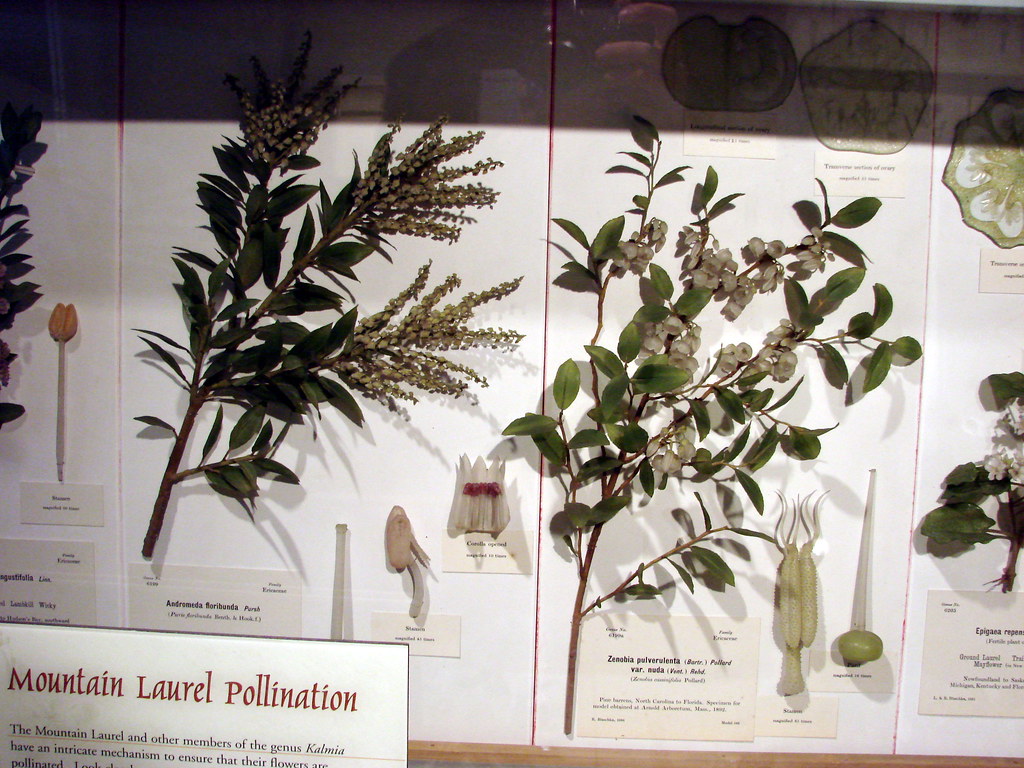
There is a room in Cambridge that stops nearly every visitor cold the moment they walk through the door. It is quiet, softly lit, and lined with glass cases holding what appear to be the most exquisite flowers you have ever seen — roses with petals so delicate they seem to tremble, orchids in impossible colors, a cactus with every spine accounted for. Then someone leans in close and realizes: every single one of these plants is made entirely of glass. Welcome to the Glass Flowers gallery at the Harvard Museum of Natural History, and welcome to one of the most quietly astonishing rooms in all of New England.
Located on Oxford Street in Cambridge’s university neighborhood, just a short walk from Harvard Square, the Harvard Museum of Natural History is technically four collections under one roof — but most visitors come specifically for the Blaschka Glass Flowers, formally known as the Ware Collection of Blaschka Glass Models of Plants. Between 1886 and 1936, a father-and-son team of Czech glassmakers named Leopold and Rudolf Blaschka produced 4,300 models representing 780 plant species, all commissioned by Harvard to teach botany to students. The Blaschkas never trained apprentices and left behind no written record of their technique. To this day, no one fully understands how they did it.
Standing in front of a glass strawberry plant — complete with runners, blossoms, and fruit at every stage of ripeness — you understand why scientists and artists alike make pilgrimages here. The level of botanical accuracy is staggering. These were not decorative pieces; they were scientific instruments, and they are still used for teaching. That combination of beauty and utility gives the gallery a peculiar gravity you rarely find in a museum.
But the Glass Flowers are far from the whole story. The museum’s natural history galleries are genuinely wonderful, especially for families. The Great Mammal Hall features a full-scale mounted kronosaurus skeleton and an extensive collection of North American wildlife. The mineralogy and geology galleries hold specimens that look like they belong in a jeweler’s window — enormous amethyst geodes, meteorite fragments, and crystals in colors that seem digitally enhanced but are entirely natural.
Plan to spend at least two hours. The museum is open daily, and the admission price is modest — particularly considering that your ticket also grants access to the Peabody Museum of Archaeology and Ethnology next door, which houses one of the most significant collections of Native American art and artifacts in the world.
The neighborhood around Harvard Square rewards a longer afternoon. Grab lunch at one of the many cafes along Massachusetts Avenue before your visit, or linger afterward in the Harvard Book Store a few blocks away. Cambridge has a distinct rhythm from Boston proper — a little more bookish, a little more unhurried — and the museum fits that character perfectly.
If you have been to Boston a dozen times and think you have seen most of it, come across the river to Cambridge. That room full of glass flowers will remind you that the most remarkable things are often hiding in plain sight, waiting for someone to lean in close enough to look.