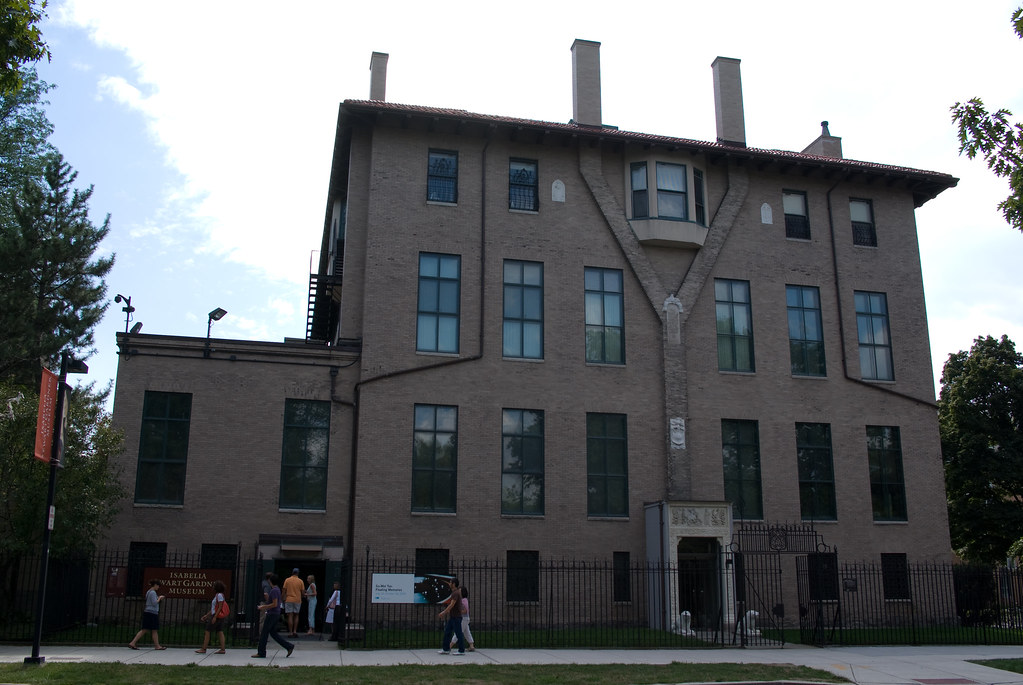
There are museums, and then there is the Isabella Stewart Gardner Museum — a place so singular, so utterly unlike anything else in Boston, that the moment you step through its doors, you feel as though you have wandered into someone’s extraordinary private dream. Located in the Fenway neighborhood, just a short walk from the Museum of Fine Arts, the Gardner is one of those rare destinations that rewards you not just with art, but with atmosphere, story, and genuine wonder.
Isabella Stewart Gardner was a Boston socialite with impeccable taste, a fierce independence, and an almost obsessive love of beauty. In 1903, she opened her personal collection to the public inside a Venetian-style palazzo she had built to her own exacting specifications. The centerpiece is the stunning interior courtyard — a sun-drenched, flower-filled garden surrounded by four stories of arched loggia, where rare orchids, seasonal blooms, and climbing nasturtiums create a living tapestry that changes with every visit. In the middle of a cold Boston winter, stepping into that courtyard feels genuinely miraculous.
The collection itself spans more than 2,500 works — paintings, sculptures, tapestries, decorative arts, and rare manuscripts drawn from across Europe and Asia. You will find Rembrandt, Vermeer, Titian, Sargent, and Degas arranged not in the clinical gallery style of a conventional museum, but exactly as Gardner herself arranged them. Her will stipulated that nothing be moved after her death, which means the rooms remain frozen in her vision: a Velázquez hung low beside a Gothic tapestry, a window seat tucked beneath a Raphael, personal letters and mementos mixed in among the masterpieces. It feels less like a museum visit and more like being invited into a brilliant woman’s home.
One of the most quietly chilling details in the entire building: three empty frames still hang in the Dutch Room, marking where Rembrandt’s The Storm on the Sea of Galilee and two other works were stolen in 1990 in what remains the largest art theft in history. The Gardner has never removed those frames, keeping the spaces as a kind of defiant placeholder until the works come home. That combination of beauty, loss, and stubborn hope gives the museum an emotional texture you simply won’t find anywhere else.
The newer Renzo Piano-designed wing, added in 2012, adds modern gallery space, a lovely café, and a performance venue that hosts jazz concerts and chamber music throughout the year. Pick up a schedule when you visit — catching a live performance in the Calderwood Hall is a genuinely lovely way to spend an afternoon.
Plan to arrive when the museum opens at 11 a.m. on a weekday if you want the place nearly to yourself. Give yourself at least two hours — the Gardner is not a place to rush. It is a place to linger, to look closely, and to leave feeling quietly grateful that someone cared so much about beauty that she built all of this and gave it to the rest of us.