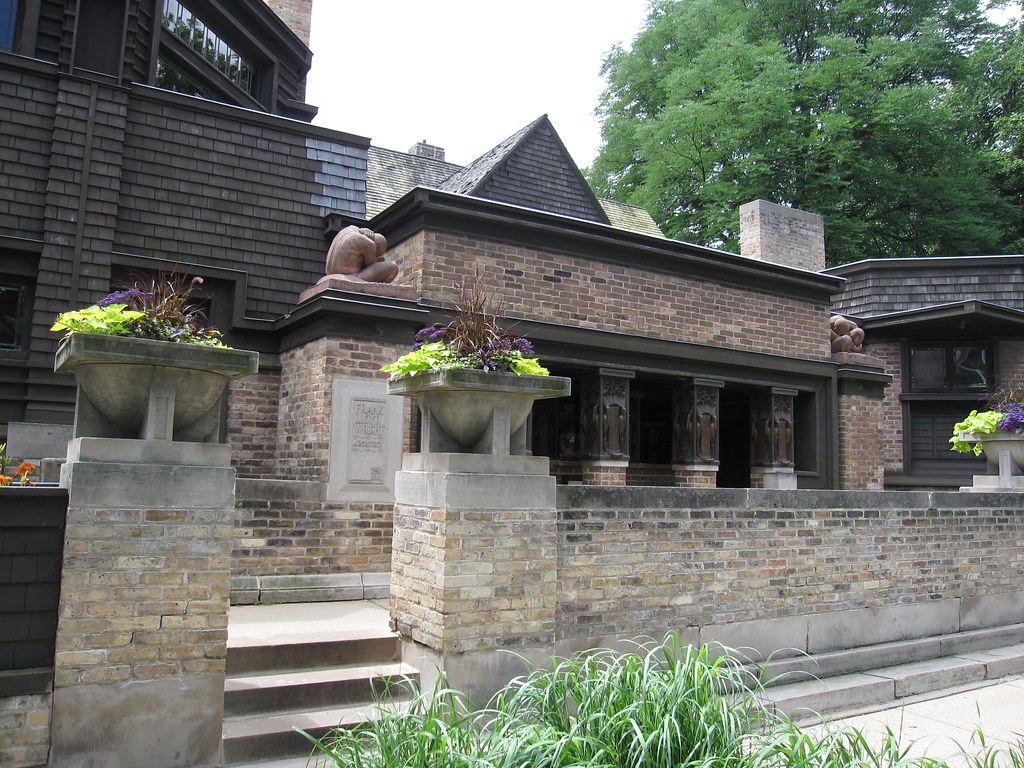
There is a moment, standing in the drafting studio at Frank Lloyd Wright’s Home and Studio in Oak Park, when the whole mythology of American architecture suddenly makes sense. The ceiling soars in an unexpected geometry. Natural light falls at angles that feel almost orchestrated. And you think: this is where it all began. Right here, in a quiet suburb just nine miles west of downtown Chicago, Wright invented the vocabulary that would reshape how humans think about living inside a building.
Oak Park is an easy L-ride or a twenty-minute drive from the Loop, and the Home and Studio sits at the corner of Chicago Avenue and Forest Avenue — a modest address for one of the most consequential buildings in the country. Wright moved here in 1889 as a 21-year-old newlywed and spent the next two decades continuously redesigning it, using his own family home as a live laboratory. The result is a structure that grew, shed its skin, and grew again, accumulating ideas the way a serious mind accumulates convictions.
Tours run daily and are led by knowledgeable docents who manage the impressive trick of being genuinely enthusiastic without being breathless. You will walk through the barrel-vaulted playroom Wright built for his six children — a room so warm and inventive that you will immediately wish you had grown up in it. You will duck into the octagonal drafting studio, suspended above the ground on chains, where Wright and his draftsmen produced some of the most celebrated plans in architectural history. You will see how he manipulated ceiling height, natural light, and the flow between rooms to make spaces feel simultaneously intimate and expansive, years before anyone coined the phrase open floor plan.
What makes the visit feel genuinely alive rather than merely educational is the texture of the place. The built-in furniture, the art glass windows casting amber and green geometry across the floors, the narrow entry sequences that suddenly open into generous living spaces — these are not things you can absorb from a photograph or a Wikipedia article. You have to stand inside them. Wright was a sensualist in the truest architectural sense, and the house rewards the visitor who slows down and pays attention with all of their senses.
The surrounding neighborhood deserves at least an hour of wandering after your tour. Oak Park contains the largest concentration of Prairie Style buildings in the world — entire blocks of horizontal lines, overhanging eaves, and earth-toned facades that feel quietly radical even now. Pick up a self-guided walking map at the studio gift shop and let yourself get pleasantly lost.
The Frank Lloyd Wright Home and Studio is operated by the Frank Lloyd Wright Trust and tickets can be booked in advance online, which is strongly recommended on weekends. The gift shop carries an excellent selection of architecture books, Wright-designed reproductions, and art glass ornaments that make for a far more meaningful souvenir than anything you will find on the Magnificent Mile. Plan to arrive hungry, because Oak Park’s modest downtown has several good lunch spots within easy walking distance.
Whether you consider yourself an architecture enthusiast or simply someone who enjoys being in a beautiful, thoughtfully made space, this is an afternoon that will stay with you. The Home and Studio is not a shrine to a distant genius. It is a living argument for what buildings can do when they are designed with genuine curiosity and care. Go see it for yourself.