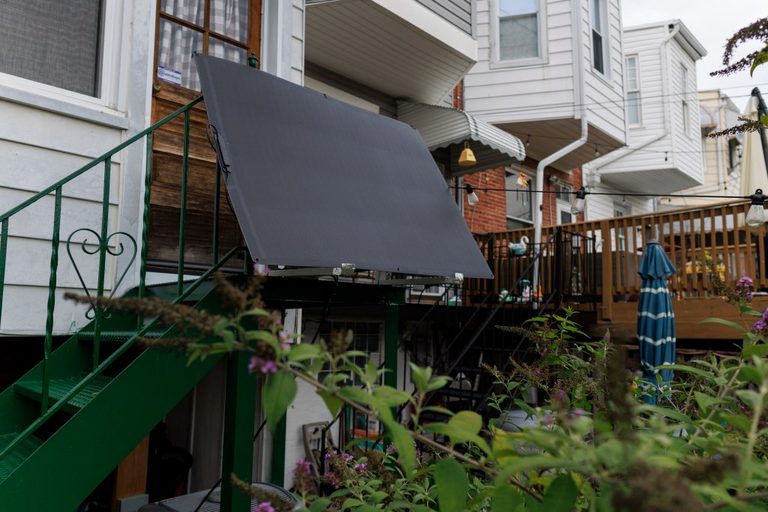
Across the United States, lawmakers are embracing a new wave of clean‑energy options that let renters and homeowners generate electricity without the hassle of permits or major installations. Known as balcony solar or plug‑in solar, these small panels can be hung from a balcony or porch and plugged into a standard outlet, offering a modest reduction in monthly utility costs.
State action builds momentum
So far, twelve states—both Republican‑ and Democratic‑led—have moved forward on legislation authorizing these systems. Nine bills have already been signed into law, while three await gubernatorial signatures. The legislation typically caps system size at 1,200 watts, roughly the power draw of a hair dryer, and often includes provisions preventing landlords or homeowners’ associations from blocking installations.
Utah led the charge when Rep. Ray Ward introduced a bill after reading about Germany’s success with balcony solar. The Utah law, passed unanimously, removes the need for a utility contract for panels up to 1,200 watts, though it still requires compliance with the National Electrical Code and Underwriters Laboratories certification—standards that are still being developed.
Other states follow suit
Virginia’s Sen. Scott Surovell praised the simplicity and affordability of the technology, emphasizing its potential to let anyone, regardless of housing situation, contribute to reduced national energy consumption. New York’s Sen. Liz Krueger highlighted the financial benefit for renters, estimating a 10% monthly savings on electricity bills. Colorado’s Sen. Cathy Kipp echoed the sentiment, noting that broader adoption could drive down costs further.
Since 2025, Connecticut, Maine, Maryland, New Hampshire, New Jersey, and Vermont have also enacted balcony solar laws. Bills in California and Massachusetts have cleared their legislatures and sit on the governors’ desks.
Safety standards remain a work in progress
Industry experts caution that U.S. home outlets are not designed for bidirectional power flow, raising concerns about circuit overload, fire, or shock hazards. Underwriters Laboratories has issued draft certification standards that would require homeowners to modify circuits before plugging in devices—an obstacle many advocates fear could slow market uptake.
Nonprofit Bright Saver, a leading advocate for balcony solar, envisions 60 million panels nationwide by 2035. The group’s co‑founder, Cora Stryker, stresses that widespread adoption hinges on clear safety guidelines that keep the “plug‑and‑play” promise intact.
Market outlook
Bright Saver sells 180‑watt panels for $285 and 360‑watt panels for $414, but cannot ship to all states until products meet the emerging safety certifications. Other manufacturers offer kits online, though consumers often lack assurance that these meet the required standards.
While the technology has a solid safety record in Germany and other countries, U.S. manufacturers are still working to develop products that satisfy both state laws and safety certifications without requiring extensive home rewiring.
Looking ahead
Advocates argue that once safety standards are finalized, the legal gray area will disappear, allowing every American to safely plug in a solar panel and lower their energy costs. Until then, lawmakers, utilities, and industry groups continue to collaborate on standards that balance accessibility with consumer protection.
Original reporting: The Connecticut Mirror — read the source article.