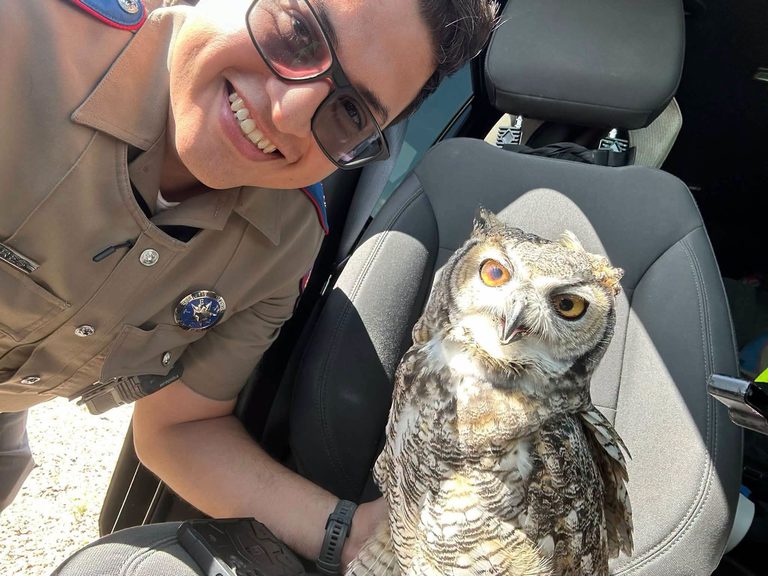
El Paso, Texas – A Texas Department of Public Safety (DPS) trooper on patrol near Van Horn spotted an injured great‑horned owl stranded in the center median of Interstate 10. Trooper Raymond Torres acted quickly, safely capturing the bird and naming it “Big Tejano” as he prepared to get the animal the help it needed.
From highway median to zoo care
After securing the owl, Trooper Torres transported Big Tejano to the DPS office in Van Horn. There, Texas Parks and Wildlife personnel took over the rescue operation, arranging for the owl’s transfer to the El Paso Zoo, a trusted partner for wildlife rehabilitation in the region.
At the zoo, staff members set up a temporary holding area where the owl could rest and receive immediate treatment. According to the Texas DPS social‑media post, Big Tejano was given intravenous fluids, fresh water and a diet appropriate for a raptor of his size. Veterinarians also performed a thorough examination to check for any internal injuries that might not be visible externally.
Ongoing monitoring and next steps
While the owl spent the night under the care of zoo veterinarians, the team continued to monitor his vital signs and overall condition. The initial assessment indicated that the owl was stable after receiving fluids and nutrition, but further observation would determine whether additional medical interventions are required.
Texas Parks and Wildlife officials emphasized the importance of public awareness when encountering injured wildlife. They urged anyone who finds a distressed animal to contact local law‑enforcement or wildlife agencies rather than attempting to handle the creature themselves. Professional responders have the training and equipment needed to protect both the animal and the public.
Community response
The rescue quickly garnered attention on social media, with many El Paso residents expressing relief that the owl was safe and praising Trooper Torres for his swift action. Local wildlife enthusiasts highlighted the role of the El Paso Zoo as a critical resource for rehabilitating native species, noting that the facility often serves as a sanctuary for birds of prey that have been injured by traffic or other hazards.
“We’re grateful for the dedication of our troopers and the expertise of the zoo staff,” said a spokesperson for Texas Parks and Wildlife. “Every rescued animal gets a chance to heal, and when possible, return to its natural habitat.”
What’s next for Big Tejano?
After the overnight care, the owl will remain at the zoo for further observation. If his health continues to improve, wildlife officials hope to release Big Tejano back into the wild where he can resume his role as a top predator in the local ecosystem.
For updates on the owl’s recovery and information on how to support wildlife rescue efforts in West Texas, readers can follow the Texas DPS and El Paso Zoo on their official social‑media channels.
Original reporting: El Paso News (HLL/CB) — read the source article.