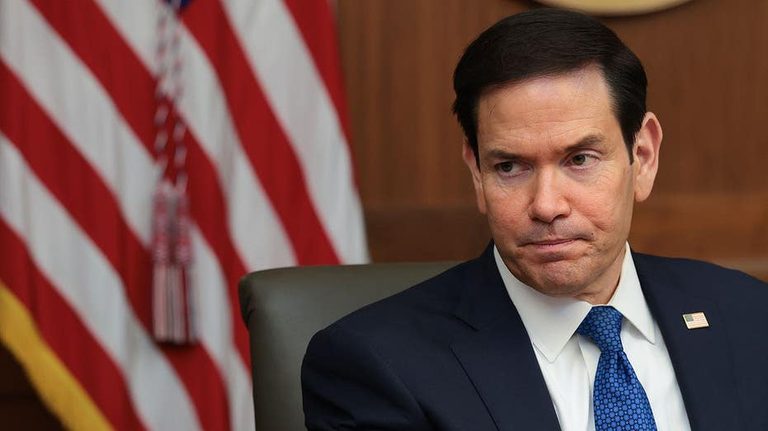
Washington announced Thursday that the State Department has formally designated American scholar Min Zin as “wrongfully detained” by Chinese authorities. The decision was made by Secretary of State Marco Rubio after a departmental review of the circumstances surrounding Zin’s arrest at a Yunnan airport on June 3.
Background on the detention
Min Zin traveled to China at the invitation of the Chinese government to attend an academic conference on Burma and Chinese foreign policy. Shortly after his arrival, officials detained him at the airport and placed him under criminal investigation for alleged threats to China’s national security. Chinese officials have accused him of spying, a charge the Chinese Foreign Ministry says is being handled under Chinese law.
According to a senior State Department official, Zin has been held in isolation for nearly 11 weeks and has been repeatedly interrogated. His family lost contact with him for a 48‑hour period, not knowing whether he was alive or where he was being held.
U.S. response
Assistant Secretary Dylan Johnson said the safety of U.S. citizens abroad remains the State Department’s top priority. “We will continue to advocate for Mr. Zin and call for the release of all U.S. citizens who are arbitrarily detained or prevented from leaving China,” Johnson stated.
The designation of “wrongfully detained” can bring additional diplomatic resources and heightened attention to Zin’s case. It also places the issue in the spotlight ahead of President Donald Trump’s scheduled September 24 meeting with Chinese President Xi Jinping at the White House.
Other Americans in similar situations
Zin joins Dr. Youlin Chen, a Chinese‑born American seismologist based in Boston, as the two U.S. citizens currently classified by the State Department as wrongfully detained in China.
The State Department reiterated its commitment to press Chinese officials for the release of all Americans it believes are being held arbitrarily, emphasizing that such cases are not consistent with international norms of due process.
Historical context
Zin, who leads the Institute for Strategy and Policy, a think tank focused on Burma, participated in the country’s 1988 pro‑democracy uprising before seeking asylum in the United States. His scholarly work on Burma and Chinese foreign policy has drawn attention from both academic circles and government officials.
China’s Foreign Ministry has denied that wrongful detention occurs in the country, asserting that each case is handled according to Chinese law. The U.S. designation, however, signals a willingness to challenge that narrative through diplomatic channels.
Implications for U.S.–China relations
The timing of the designation, coming just weeks before a high‑level summit between President Trump and President Xi, underscores the delicate balance of addressing human‑rights concerns while pursuing broader diplomatic objectives. Analysts note that the U.S. may use the upcoming White House visit to raise Zin’s case directly with Chinese leadership.
For now, Zin’s family and colleagues continue to seek information about his condition and location, while the State Department prepares to intensify its advocacy efforts.
Original reporting: Fox News (HLL/CB) — read the source article.