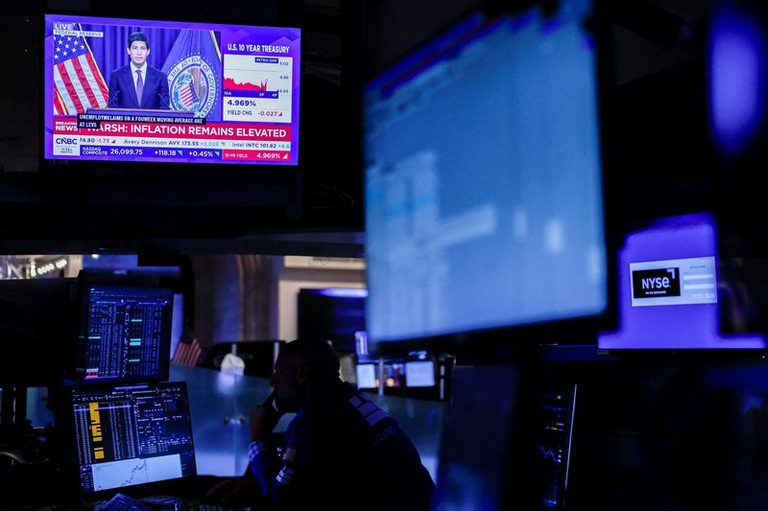
Washington – In an exclusive interview, St. Louis Federal Reserve President Alberto Musalem cautioned that the United States may need additional interest‑rate hikes to lower inflation that remains well above the Fed’s 2% goal. Musalem emphasized that both persistent consumer demand and a widening commodity‑price shock, extending beyond oil, are keeping price pressures elevated.
Policy restraint needed now
“Both persistent demand and recurring supply forces are continuing to contribute to keeping inflation risks elevated, and I judge that without further policy restraint on inflation it is more likely to be substantially above our 2% target in 18 months than at target,” Musalem told Reuters.
He added that acting sooner with “incremental policy firming” would be less disruptive than waiting for a larger, more abrupt move later in the year. Musalem noted that even after stripping out oil‑related effects, underlying inflation appears about a percentage point above the Fed’s target and is “moving in the wrong direction.”
Recent inflation data and the Trump administration’s tariff plan
The Personal Consumption Expenditures Price Index, the Fed’s preferred gauge, was 3.7% year‑over‑year in July, up from a low of 2.3% in April 2025. That rise followed the Trump administration’s rollout of a global import‑tariff strategy, which has added to price pressures on a range of goods.
Additional shocks have come from the U.S.–Israeli conflict with Iran, which pushed diesel prices to record highs, and from rising commodity costs such as copper, which Musalem linked to the artificial‑intelligence investment boom.
Labor market remains strong
Despite the inflation challenge, Musalem said the labor market is not a source of price pressure. “The labor market is not a source of inflation. There’s not necessarily a need to slow the labor market down or to cool it to attain our inflation target,” he said, describing employment as “stable and balanced and around full employment.”
He expressed confidence that tighter policy does not have to come at the cost of higher unemployment or a recession.
Fed’s current stance and market expectations
The Fed recently raised its policy rate by a quarter‑percentage point, bringing the target range to 3.75%–4.00%, which Musalem described as “on the accommodative side.” Investors currently anticipate three more quarter‑point hikes before the April meeting cycle, with roughly even odds of a move in October, the month of the upcoming midterm elections.
Fed officials’ median projection after the latest meeting suggests one more hike this year, with a near‑even split on whether another increase will be needed in 2027.
Business outlook
Companies in Musalem’s district report sharply higher non‑labor input costs—including fuel, raw materials, transportation, insurance, and skilled‑labor wages—and plan to raise selling prices. “There is ample evidence that inflation is the principal problem we have right now,” he said.
Overall, Musalem stressed that earlier, measured policy action is the best path to bring inflation back toward the 2% target within about a year and a half, while preserving a resilient economy.
Original reporting: Appleton, WI News Feed (HLL/CB) — read the source article.