When Springfield’s Commercial Street beat was patrolled by Officer Harley “Hink” Hinkley in May 1918, a chance encounter set the stage for a lasting partnership between the city and what would become the world’s largest Pentecostal fellowship.
Police curiosity leads to a pivotal tour
Hinkley noticed two strangers peering into the window of an empty storefront. After introducing himself, he learned the men were representatives of the fledgling Assemblies of God (AG), then based in St. Louis and searching for a new location for their headquarters and publishing plant.
The officer escorted the visitors down Commercial Street and then a block south to the intersection of Lyon Avenue and Pacific Street, where a two‑story brick building that had housed a wholesale grocery stood. Its thick concrete floor impressed the AG scouts as strong enough to support heavy printing presses.
Financing the purchase
The building’s owners asked $3,200 for the property, but the AG’s budget allowed only $3,000. Rather than abandon the search, Hinkley reached out to nearby business owners, collecting donations that covered the $200 shortfall. Mark Forrester, current chief of AG communications, says the officer’s generosity was a key factor in the move.
Springfield’s News & Leader later noted that without Hinkley’s interest, the Gospel Publishing House might have settled in Joplin, the AG’s backup plan.
Immediate celebration and long‑term impact
The June 1, 1918 issue of The Christian Evangel newspaper announced the relocation, praising Springfield’s “salubrious” setting and its strategic railroad connections. The city’s central location soon made the AG the largest outbound mailer for the U.S. Postal Service in Springfield, shipping six tons of fresh publications daily by 1960.
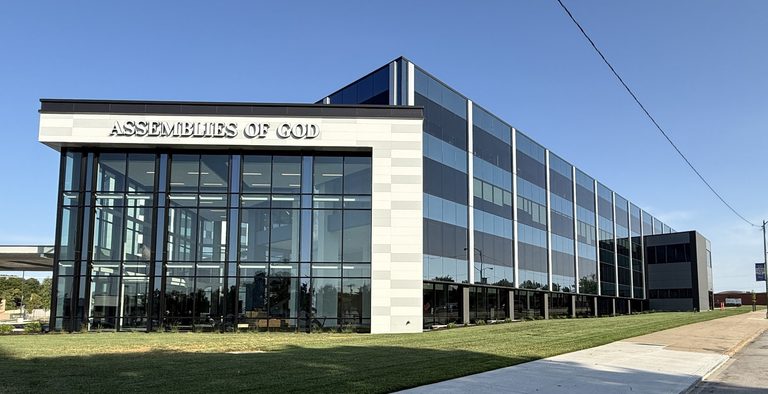
Today, the AG’s Springfield campus employs more than 1,000 people, and the organization reports 88 million members worldwide, with over three million in the United States.
Growth of education and community ties
In the early 1920s the Commercial Club purchased 15 acres near the Ozark Empire Fairgrounds and donated it to the AG for a Bible institute. Within two years a brick campus was built, and Central Bible Institute opened in 1924 with 120 students. The school evolved into Central Bible College and later merged into Evangel University, continuing the city’s tradition of training missionaries and pastors.
General Superintendent Doug Clay credits the early collaboration between local businessmen and the AG for “sparking an enduring relationship” that still defines Springfield’s identity as a hub of faith‑based outreach.
Organizational structure and identity
Formed in 1914 at a gathering in Hot Springs, Arkansas, the Assemblies of God prefers the term “cooperative fellowship” over “denomination,” emphasizing local church autonomy. Governance rests with a General Council of licensed ministers and lay delegates, and the top officer holds the title of General Superintendent, elected every four years.
Attempts in the 1920s to rename the group or alter its leadership titles were rejected after vigorous debate, preserving the organization’s original identity.
Legacy of the 1918 move
Officer Hinkley’s modest act of curiosity and community fundraising not only secured a building but also anchored a global Pentecostal movement in Springfield. The partnership endures through ongoing missionary work, publishing, and education, reminding residents that local initiative can shape worldwide influence.
Original reporting: Springfield Daily Citizen — read the source article.