On a weekday morning in June, before the tour groups arrive and before the heat settles over South Park Avenue, the Buffalo Japanese Garden is about as quiet as a city park gets. A great blue heron stood motionless at the edge of the koi pond when I visited last summer. Nobody pointed at it. Nobody took a flash photo. It just stood there, and so did everyone else.
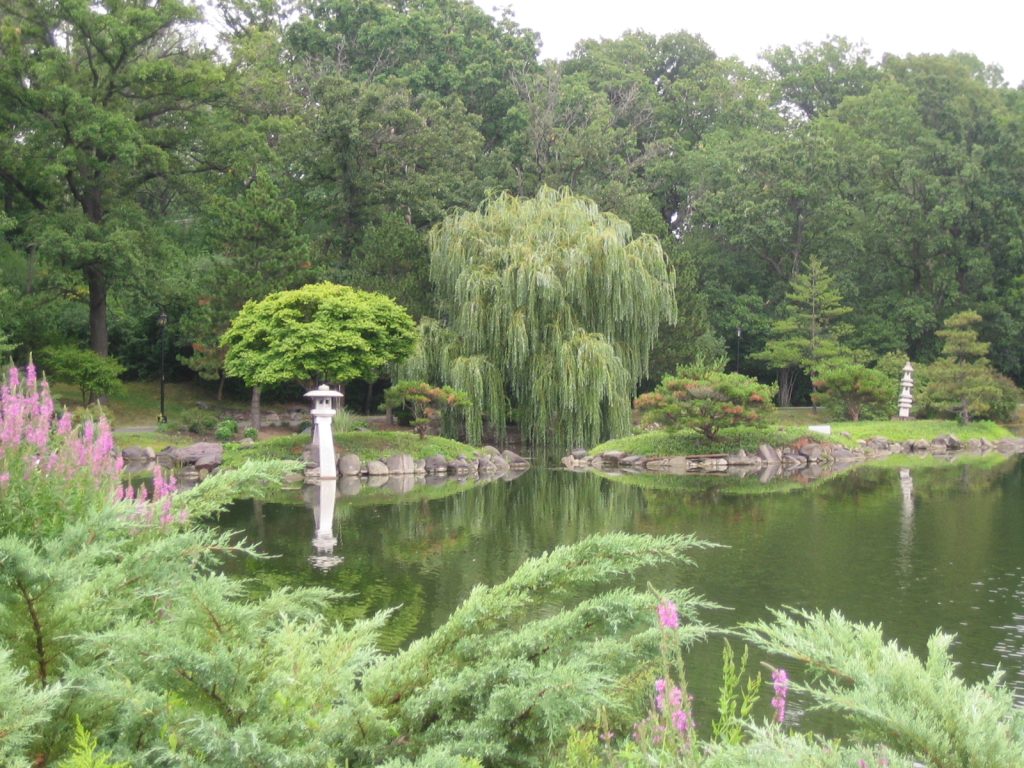
The garden sits inside South Park, the Frederick Law Olmsted-designed greenspace on the city’s south side, about a ten-minute drive from downtown. The garden itself occupies roughly one and a half acres and was originally created in 1974 as a gift from Buffalo’s sister city, Kanazawa, Japan. It was restored significantly in the 2000s and has been carefully maintained since. The layout follows traditional Japanese garden principles: a central pond, stone lanterns, a moon bridge, pruned evergreens, and a teahouse that isn’t always open but is worth walking around regardless.
Getting there is straightforward. Take South Park Avenue south, turn into the main South Park entrance, and follow the signs. Parking is free in the lot off McKinley Parkway. The Japanese Garden entrance has a small gate that’s easy to miss if you’re walking fast — it’s set back from the main park path, marked by a low wooden arch. Admission is free from spring through fall during regular park hours, though there’s a nominal fee for some special events held on the grounds.
What makes the place worth a specific trip rather than just a stroll-through is the density of detail compressed into a small space. The stone path around the pond takes maybe ten minutes to walk, but there’s enough to look at — the arrangement of rocks, the way the plantings frame the water, the carved lanterns at odd angles — that people routinely slow down and double back. Kids tend to fixate on the koi, which are large and old and completely unbothered by human attention. Adults tend to slow down in ways they don’t expect.
The best times to visit are spring, when the cherry trees and Japanese maples are doing what they’re supposed to do, or early fall, when the foliage shifts and the crowds are thinner than summer. Midsummer is fine too, though the garden can get warm quickly since the canopy isn’t dense. Mornings are consistently better than afternoons. By noon on a Saturday in July, it can feel crowded for its size.
There are no concessions inside the garden. South Park has a larger facility building nearby, and the broader Olmsted park grounds are worth a walk if you have time — the South Park Rose Garden is adjacent and usually peaks in June. But the Japanese Garden functions as a self-contained destination. You don’t need a plan beyond showing up.
The garden is managed by the Buffalo Olmsted Parks Conservancy, which also oversees the broader network of Olmsted parks across the city. If you want to support the maintenance work, the Conservancy accepts memberships and donations. The garden operates on a relatively thin budget for what it delivers, which makes it one of the better quiet afternoon bargains in the city — or a free morning, if you get there early enough to have the heron to yourself.