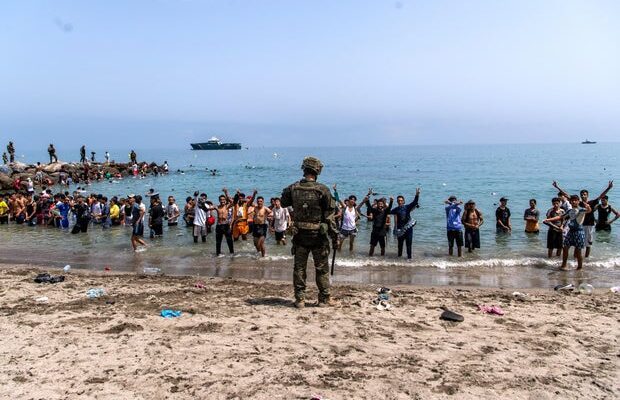
Spain’s prime minister, Pedro Sánchez, told Cadena SER that social‑media rumors about the recent influx of migrants into the enclave of Ceuta were part of a coordinated disinformation campaign by Russian and Israeli actors, as well as far‑right groups that seek to undermine Europe.
Ceuta’s migrant surge and the alleged foreign influence
At the end of August, roughly 5,000 migrants were still in Ceuta, including about 1,200 minors, after most were returned to Morocco. Sánchez said research from the European External Action Service (EEAS) points to links between the rumors and Russian and Israeli networks, though he offered no further specifics.
He argued that any Russian or Israeli involvement would not stem from concern over migration but from Spain’s “courageous” positions on the war in Ukraine and the Gaza conflict. “If Russia or Israel spreads disinformation on this issue, it is because of the political positions we are taking,” Sánchez said.
Reactions from Israel and Russia
Israel’s foreign minister, Gideon Saar, dismissed Sánchez’s claims as “brazen lies,” accusing the Spanish leader of falsely blaming Israel for the Ceuta situation. Israel’s UN ambassador, Danny Danon, also criticized Spain, suggesting the country should explain why it maintains colonial enclaves in Africa.
Russia’s government, cited by RBC and Europe Press, rejected the allegations, with Kremlin‑linked officials calling the accusations unfounded.
European response to the Ceuta crisis
The surge prompted a joint letter from leaders of 22 EU member states, including Germany’s Friedrich Merz and Italy’s Giorgia Meloni, urging stronger deterrence of illegal migration, tighter external borders, and policies that reduce pull factors. The letter referenced Spain’s recent regularization program, which has attracted over 1.1 million applications for legal status.
Sánchez defended the program, saying it helps migrants work legally, contribute to the welfare state, and integrate into Spanish society.
Spain’s cooperation with Morocco
While some officials suggested Morocco may have facilitated the border rush, Sánchez denied any Moroccan involvement, describing Spain’s cooperation with Morocco on immigration as “frankly very positive” and emphasizing that a lasting solution requires joint effort.
The episode underscores the broader geopolitical tug‑of‑war over migration narratives, with European leaders warning that foreign disinformation can inflame public sentiment and strain international relations.
Original reporting: KTSA News/Talk (San Antonio) — read the source article.