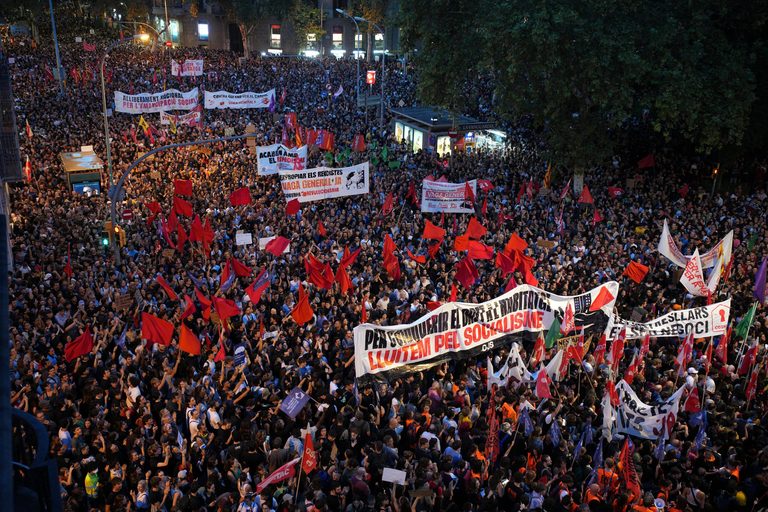
Madrid – After a night of unrest in Barcelona that saw thousands on the streets and clashes with police, the Spanish government is moving to approve a package of urgent housing measures. Prime Minister Pedro Sánchez’s administration plans to submit the proposals to an interim legislature before the scheduled national elections on Nov. 29.
Local turmoil sparks national response
The disturbance in Barcelona followed a wave of protests across Spain sparked by the eviction of an 87‑year‑old woman in Madrid. Organizers had to postpone a planned march because of a severe weather alert, but when the crowd finally gathered on Monday, groups of hardcore activists turned a peaceful demonstration into a violent confrontation, hurling stones and setting trash containers ablaze.
In response, Sánchez’s government is expected to revive a set of housing reforms that Parliament rejected last Friday, prompting the prime minister’s call for early elections. The measures will be sent to an interim legislative body that remains in place until the vote.
Key components of the proposed package
Housing Minister Isabel Rodríguez outlined the main elements during a press briefing last week:
- Extend protection against evictions for vulnerable residents until 2030.
- Introduce stricter regulation of room‑rental platforms.
- Impose a new tax on seasonal short‑term rentals.
- Ban speculative real‑estate purchases that drive up prices.
- Provide tax incentives for landlords who maintain affordable rentals.
These provisions aim to address rising living costs and a chronic shortage of affordable homes, even as Spain enjoys strong economic growth as Europe’s fourth‑largest economy.
Why the reforms matter for families
For many Spanish families, the lack of stable, affordable housing has become a daily hardship. Protesters have demanded stronger tenant protections, stronger action against fraud, and a ban on evictions when no alternative housing is available. Extending eviction safeguards to 2030 directly supports the traditional family unit by helping parents keep a roof over their children’s heads.
The proposed tax on seasonal rentals targets properties that sit empty for most of the year, converting them into permanent homes for locals. By discouraging speculative buying and offering tax breaks to responsible landlords, the government hopes to increase the supply of long‑term rentals at reasonable rates.
Political context and next steps
The housing package arrives amid a politically charged atmosphere. Sánchez’s call for a snap election on Nov. 29 reflects growing pressure from opposition parties and public dissatisfaction. Nonetheless, the administration argues that swift action on housing is essential to protect citizens’ liberty to secure safe, stable homes—a cornerstone of both personal freedom and family stability.
Critics, including some market analysts, warn that higher taxes on short‑term rentals could hurt tourism revenue. However, the government maintains that the long‑term benefits of affordable housing outweigh short‑term economic concerns.
Sánchez is slated to hold a news conference on Tuesday to detail the measures and answer questions from the press. If approved, the interim legislature will ratify the reforms before the election, potentially setting a new standard for housing policy across Europe.
Original reporting: Alexandria, VA News – WTOP News — read the source article.