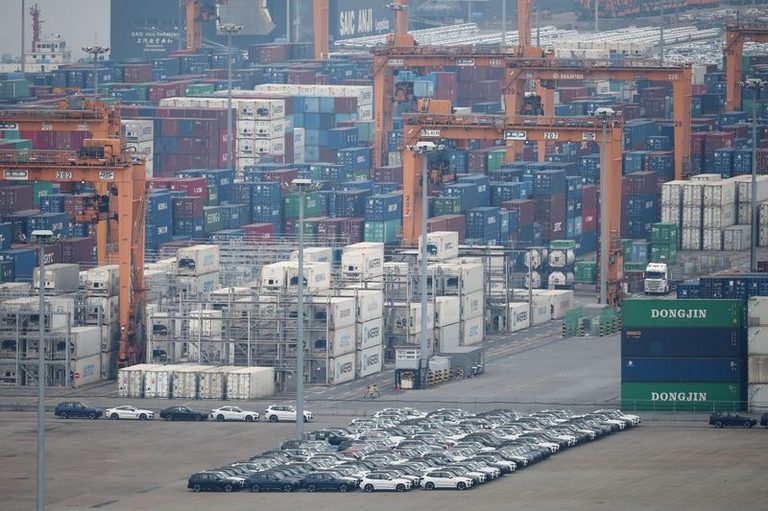


Seoul – The Korea Customs Service announced on Saturday that South Korea’s exports have reached $709.4 billion so far in 2026, eclipsing the previous year’s record of $709.3 billion. The surge reflects a booming global appetite for artificial‑intelligence (AI) chips, a sector in which the nation’s leading memory‑chip manufacturers, Samsung Electronics and SK Hynix, dominate.
Record‑breaking growth continues
Exports in August alone jumped 69 % compared with the same month a year earlier, extending a streak of growth to a 15th consecutive month. If the current trajectory holds, South Korea is poised to become the fourth country worldwide to post annual exports of $1 trillion, joining the United States, China and Germany.
AI chip demand fuels the surge
The rapid expansion of AI technologies has intensified demand for high‑performance memory chips. Samsung and SK Hynix, both headquartered in South Korea, have benefited from soaring prices as investors pour capital into AI infrastructure, further tightening an already strained global chip supply. Analysts note that the heightened demand is not a temporary spike but part of a longer‑term shift toward AI‑centric computing.
Implications for the Korean economy
Export growth is a key driver of South Korea’s economic resilience. The customs data suggest that the country’s trade balance will remain strongly positive, supporting domestic employment and fiscal stability. The government has emphasized the importance of maintaining a competitive edge in semiconductor manufacturing, including continued investment in research and development and incentives for high‑tech firms.
Global trade context
South Korea’s export performance comes at a time when many nations are grappling with supply‑chain disruptions and geopolitical tensions that affect semiconductor production. By leveraging its advanced manufacturing base, the country is positioning itself as an essential supplier for the worldwide AI revolution.
Looking ahead
Industry observers expect the export momentum to persist through the remainder of the year, provided that global demand for AI‑related hardware remains robust. The customs service will continue to monitor trade flows closely, offering weekly updates that help businesses and policymakers gauge the health of the Korean economy.
For readers interested in the broader impact of these trends, the rise in AI chip exports underscores the interconnectedness of technology, trade policy, and economic growth—a reminder that strong, free‑market principles continue to drive innovation and prosperity worldwide.
Original reporting: Appleton, WI News Feed (HLL/CB) — read the source article.