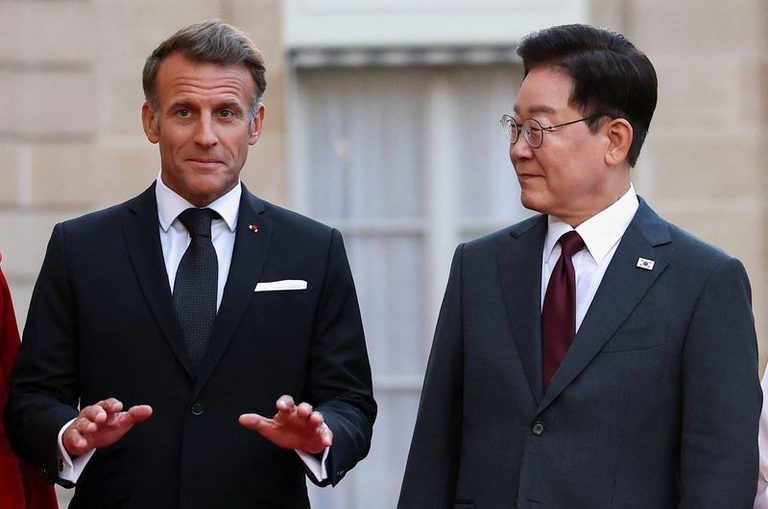
South Korean President Lee Jae Myung, on a state visit to France, met with French President Emmanuel Macron in Paris to talk about international security, including the strategic Strait of Hormuz. The leaders emphasized that their discussion was about how South Korea could help safeguard maritime navigation, not about deploying troops.
Focus on contribution options
National Security Adviser Wi Sung‑lac told reporters that the talks centered on reviewing possible contribution options for Seoul, and that no decision had been made yet. He said the review is still ongoing and that any action would be chosen after careful consideration.
Strategic importance of the strait
The Strait of Hormuz is a vital energy corridor for South Korea, accounting for about 61% of its crude oil imports and 54% of its naphtha imports last year. Maintaining free navigation there is essential for the stability of global supply chains.
No link to U.S. investment talks
Wi also rejected claims that South Korea’s review of Hormuz options was tied to U.S. investment discussions, stating the two matters are unrelated. The South Korean defence ministry confirmed it had sent an inspection team to the United Arab Emirates to gather information on regional security, but stressed the mission does not presume a troop deployment.
Iran’s reaction and U.S. context
Iran’s foreign ministry warned that any South Korean military participation in Hormuz would be seen as support for U.S. aggression and could have serious consequences. The announcement follows President Donald Trump’s recent decision to scale back joint U.S.–South Korea exercises, citing Seoul’s refusal to assist in the U.S.–Iran conflict.
South Korea’s presidential office also refuted reports that the United States had set a deadline for Seoul to dispatch assets to Hormuz, calling such reports untrue.
Original reporting: Appleton, WI News Feed (HLL/CB) — read the source article.