When two Oglala Lakota scouts spotted a drill beginning on Pe’ Sla, a sacred prairie in the Black Hills of South Dakota, they alerted tribal leaders. Within days a coalition of nine tribes, the Indigenous‑led NDN Collective and two environmental groups organized a legal challenge and a physical occupation that forced Pete Lien & Sons to abandon its exploratory drilling.
Background and the permit
On Feb. 27 the U.S. Forest Service issued a categorical exclusion for Pete Lien & Sons to drill 18 boreholes on national forest land, including at least ten holes inside a two‑mile buffer around Pe’ Sla. The permit skipped the usual environmental review for land that has been prayed over for generations.
Pe’ Sla is described by tribal leaders as a “church, pantry and pharmacy” – the place where the Great Sioux Nation’s ancestors survived a great fire and where traditional prairie turnip (timpsula) grows. The company said it was drilling for graphite, a critical mineral used in electric‑car batteries, but tribal leaders warned the project set a precedent for attacking other sacred sites.
Legal and on‑the‑ground response
In early April NDN Collective, the Black Hills Clean Water Alliance and Earthworks filed a lawsuit against the Forest Service, and nearly every Dakota tribe filed a separate suit. While the courts moved slowly, the company accelerated drilling to pre‑empt any restraining order.
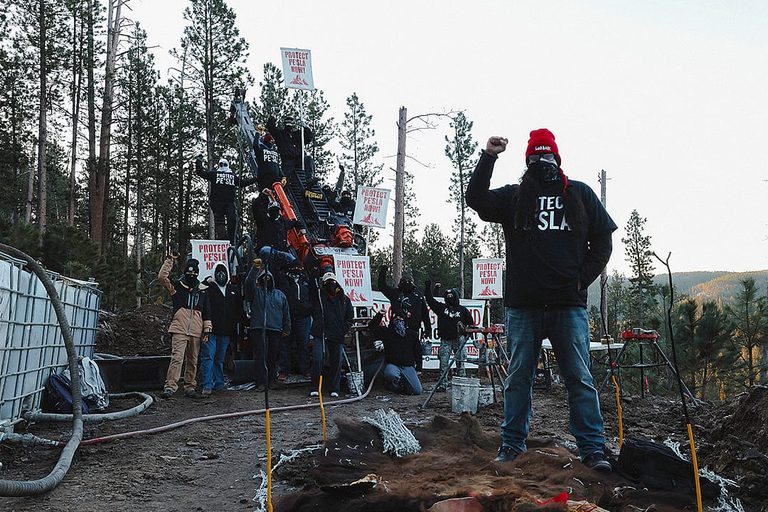
On April 30 organizers deployed a drone and discovered the company had moved its crews to two illuminated pads across the highway. That night a group of about 40 tribal members and supporters blocked the access road and placed their bodies on the drill pads, effectively halting operations.
For seven days the occupiers lived on the pads, organized by a youth council and elders, and endured cold temperatures, police and private security presence, and helicopter overflights. They kept the site calm with prayer, which tribal leader Dr. Valeriah Big Eagle said was their only “weapon.”
Federal injunction and company withdrawal
On May 4 a federal judge issued an injunction, finding the plaintiffs were likely to prove the Forest Service had unlawfully waved through a project that required a three‑year permit under a one‑year exemption. The company subsequently wrote to the Forest Service withdrawing its plan, citing no reason.
Organizers believe the company recognized that a prolonged legal battle would be costly for a family‑run limestone and concrete business, especially when the graphite prospect was unproven.
Lessons for other communities
The coalition’s success rested on stacking tactics: simultaneous lawsuits, a physical occupation, media outreach and a unified legal claim of Indigenous sovereignty. The case shows that tribal nations can leverage federal courts as a collective force and that rapid on‑the‑ground action can pressure companies before courts render decisions.
As the Great Sioux Nation noted, the fight is not isolated – many reservations sit atop critical mineral deposits needed for the clean‑energy transition, yet they remain among the most under‑invested communities in the nation. This victory offers a template for other Indigenous groups facing similar threats.
Original reporting: El Paso News (HLL/CB) — read the source article.