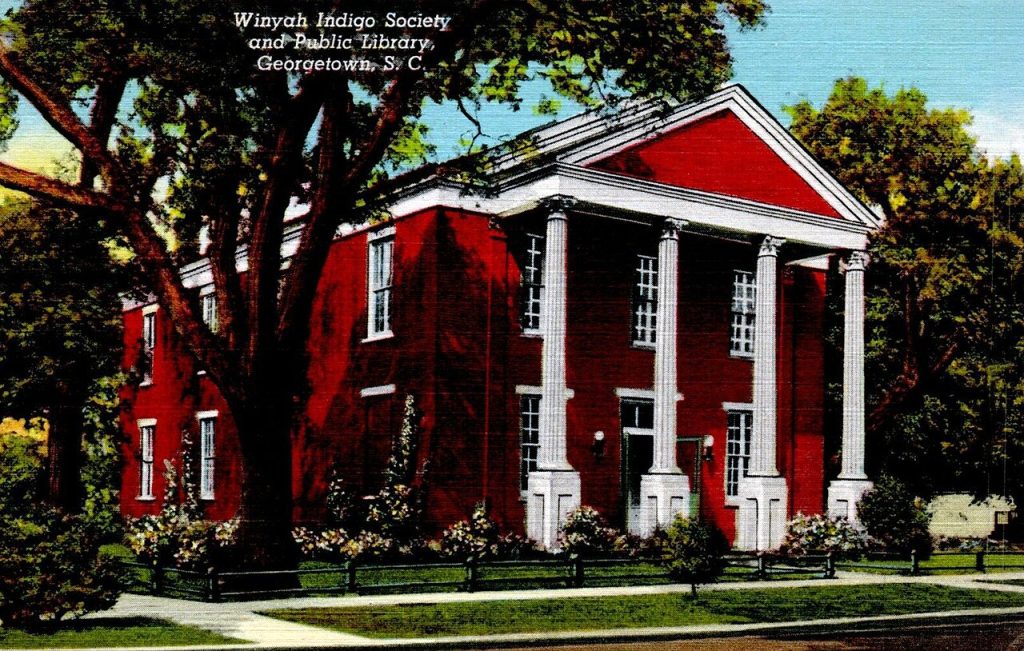
There are places that stop you mid-stride, places where the past reaches out and taps you on the shoulder in the most gracious way possible. The Winyah Indigo Society Hall on Prince Street in the heart of historic Georgetown is exactly that kind of place. Standing since 1857, this quietly magnificent building is one of the oldest social halls in the American South, and stepping onto its grounds feels like being let in on a secret that Georgetown locals have treasured for generations.
The Winyah Indigo Society itself was founded in 1755 by indigo planters who pooled their resources — and in a rather enlightened move for the era, their indigo crops — to fund a school for children of the community. The hall you see today replaced an earlier structure and has hosted everything from charity functions to community gatherings that shaped the culture of the Georgetown Lowcountry. That layered history gives the building an atmosphere you simply cannot manufacture. The architecture is graceful Federal-style brick, unpretentious yet dignified, and the surrounding oak trees draped in Spanish moss frame it in a way that no landscape architect could improve upon.
What makes a visit here so rewarding is the sense of genuine discovery. Unlike some historic sites that feel over-curated, the Winyah Indigo Society Hall retains an authentic, lived-in character. Walking the grounds and peering at the exterior, you get a real sense of how Georgetown’s prosperous colonial-era society organized itself around civic duty and education. The hall is located just a short stroll from the main commercial district on Front Street, so it fits naturally into a broader afternoon exploring the town’s compact and walkable historic core.
Plan your visit around one of the periodic open events or historical tours that the society occasionally hosts. Local guides bring the story of indigo cultivation — once the economic backbone of the entire region — to vivid life. You will learn how the blue dye trade connected Georgetown to Britain, the Caribbean, and the wider Atlantic world in ways that shaped South Carolina’s identity for centuries. It is the kind of context that makes every other sight in Georgetown click into place.
After your visit, the rest of Prince Street rewards a slow walk. The neighborhood is lined with antebellum homes and mature live oaks, and the pace is unhurried in the best possible way. Georgetown is a town that rewards curiosity, and the Winyah Indigo Society Hall is perhaps the finest single example of why. Come with comfortable shoes, a genuine appetite for history, and the willingness to linger. You will leave with a far richer understanding of what made this corner of the South so remarkable — and a very strong desire to return.