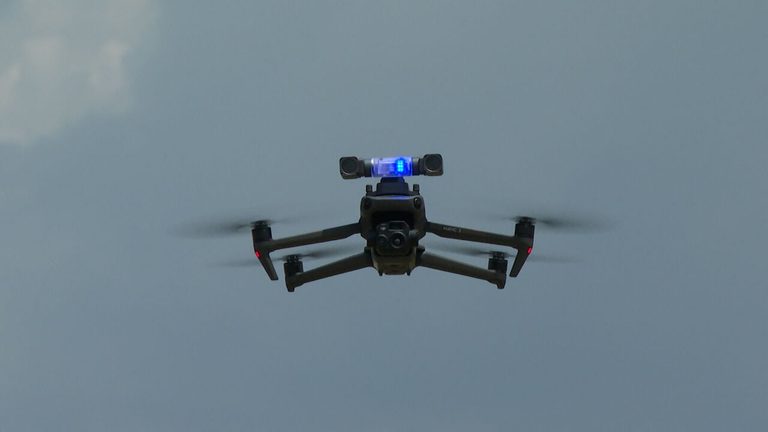
Shreveport, La. – At a recent meeting of the City Council’s Public Safety Committee, the Shreveport Police Department presented the results of a two‑week pilot of its new “drone‑as‑first‑responder” program. The demonstration highlighted how unmanned aerial systems can arrive at emergency scenes faster than ground units, providing real‑time video and thermal imaging to officers before they arrive.
Pilot results and operational impact
During the trial period, two drones completed a total of 127 flights. In 74% of those incidents, the drones reached the dispatched location before a police officer could arrive on scene. Police officials said the early visual feed helped them assess whether a physical presence was necessary, potentially reducing unnecessary deployments and improving officer safety.
Capt. Dean Willis, who leads the department’s technology unit, emphasized that the drones are a tool, not a replacement for trained personnel. “There are some significant factors that have to go along with that. It is not just the unit itself,” Willis said, noting the need for constant monitoring and rapid launch capabilities.
Staffing and funding challenges
The primary hurdle identified by the committee is staffing. A dedicated team must watch the live feeds, evaluate incoming calls and launch the drones within seconds. Without permanent personnel, the system cannot operate at the speed required for emergency response.
Committee members also discussed the financial side of the program. While no funding decisions were made during the meeting, the next steps include determining the number of drones and docking stations needed, identifying optimal locations for those stations, and establishing a sustainable budget for equipment, maintenance and staffing.
Potential expansion to other city services
Beyond law‑enforcement, council members explored how the drone platform could support fire‑department responses, code‑enforcement inspections and other municipal operations. The drones’ live video and thermal imaging capabilities could help firefighters assess fire spread, enable code officers to spot violations from the air, and provide a secure method for storing footage as evidence.
Officials noted that the technology could also aid in search‑and‑rescue missions, traffic incident assessments and crowd monitoring at public events, offering a versatile tool for a range of public‑safety needs.
Looking ahead
As the city moves forward, the Public Safety Committee will continue to evaluate the program’s effectiveness, cost‑benefit profile and staffing requirements. The department plans to submit a formal request for funding in the upcoming municipal budget cycle, seeking approval for additional drones, docking infrastructure and a permanent monitoring crew.
Community members and local businesses were invited to provide input on the program’s expansion, reflecting the city’s commitment to transparency and public‑safety innovation. The council’s ongoing review will determine how the drone system fits into Shreveport’s broader strategy for modernizing emergency response while safeguarding taxpayer resources.
Original reporting: KTBS 3 (Shreveport) — read the source article.