Milwaukee’s Sherman Park neighborhood has undergone a series of public‑private projects since the summer of 2016, when the fatal shooting of 23‑year‑old Sylville Smith sparked days of protest and property damage. County Board Chairwoman Marcelia Nicholson‑Bovell, who represented the area at the time, says the unrest highlighted both public‑safety concerns and a history of disinvestment.
State and local funding launches
Within weeks of the uprising, former Gov. Scott Walker, Mayor Tom Barrett and County Executive Chris Abele announced a $4.5 million state investment aimed at improving housing stock and expanding employment opportunities. The package allocated $1.5 million for job‑training programs, $2 million for demolition and renovation of tax‑foreclosed properties, and $1 million in Wisconsin Fast Forward grants for local businesses and nonprofits.
MERI program and home rehabilitation
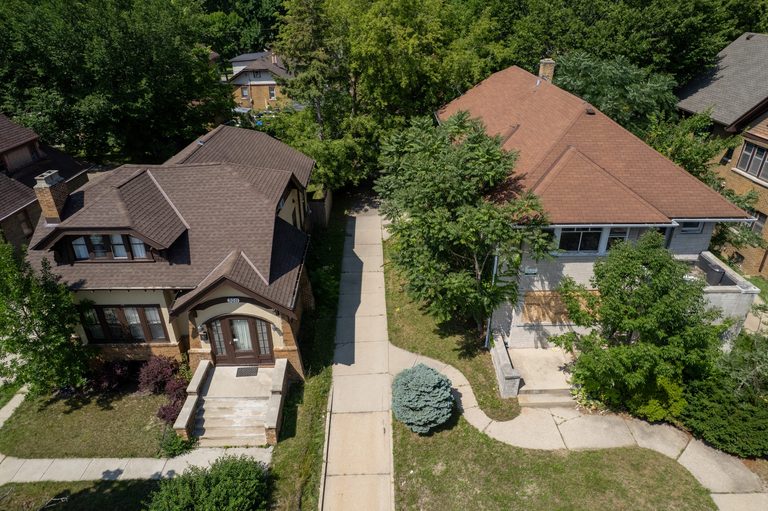
The city used $1 million of the funds to start the Milwaukee Employment/Renovation Initiative (MERI). Six developers were allowed to purchase distressed, tax‑foreclosed homes for $1 each, receiving a $10,000 grant per property to rehabilitate them for resale. Early criticism from residents slowed progress, but by mid‑2019 developers had renovated and sold 104 homes, 81 of them in the greater Sherman Park area. Private donations and additional financing brought the total investment in those properties to $7.9 million.
Each renovation required the employment of at least one worker certified under the city’s Residents Preference Program, which serves unemployed, underemployed or low‑income residents. The program logged roughly 33,000 labor hours.
Nonprofit involvement and workforce training
Jim Gaillard, vice president of Ezekiel Community Development Corp. (Ezekiel HOPE), explained that the initiative aligned with the nonprofit’s mission to train chronically unemployed individuals, minority contractors and those impacted by the justice system in construction trades. Ezekiel HOPE sold the renovated homes to first‑time owners, aiming to provide both housing stability and hope for economic advancement.
Expansion and the Homes MKE program
Mayor Cavalier Johnson later expanded the effort with MERI 2.0, opening the program to a broader set of tax‑foreclosed properties. Lafayette Crump, commissioner of the Department of City Development, said the work fed into the Homes MKE program, which has fully renovated 77 homes and has 20 more in progress.
Community grant fund
The Greater Milwaukee Foundation responded to the unrest’s community spirit by creating the Reasons for Hope MKE micro‑grant fund, initially seeded with $200,000. Over ten years the fund has awarded 312 grants totaling more than $2 million to grassroots projects across the city, including youth arts, community gardening and wellness programming in Sherman Park.
Community members serve on the fund’s 13‑member advisory council, receiving training on grant administration. Institutional donors and private contributors have added $146,800 to the fund.
Physical rebuilding and park improvements
Several businesses damaged during the protests have been rebuilt, including a BMO bank branch, O’Reilly Auto Parts, Jet Beauty Supply and a former BP gas station now operating as a Citgo. The Sherman Phoenix Marketplace development, a new tax‑incremental district, received $225,000 from the city, while federal and state officials advocated for additional grants, such as a $750,000 award to the Wisconsin Women’s Business Initiative Corp. to support local entrepreneurs.
Milwaukee County secured a $250,000 Community Development Investment Grant in 2018 for construction costs of the entrepreneurial hub, and funded $2.3 million in HVAC upgrades for the Mary Ryan Boys & Girls Club in 2016.
Recent park revitalization
Leveraging nearly $1 million from the American Rescue Plan Act, the County Board and Nicholson‑Bovell helped finance a multimillion‑dollar revitalization of Sherman Park. Improvements include a new splash pad, upgraded lighting, resurfaced athletic fields and enhanced pathways. “When you go into Sherman Park today, it looks a lot different than it did 10 years ago,” Nicholson‑Bovell said.
While the physical landscape has changed, officials acknowledge that measuring direct benefits to longtime residents remains challenging. The investments have certainly altered the neighborhood’s appearance and created new job‑training opportunities, but the full impact on families who endured the 2016 unrest is still being assessed.
Original reporting: Wisconsin Watch — read the source article.