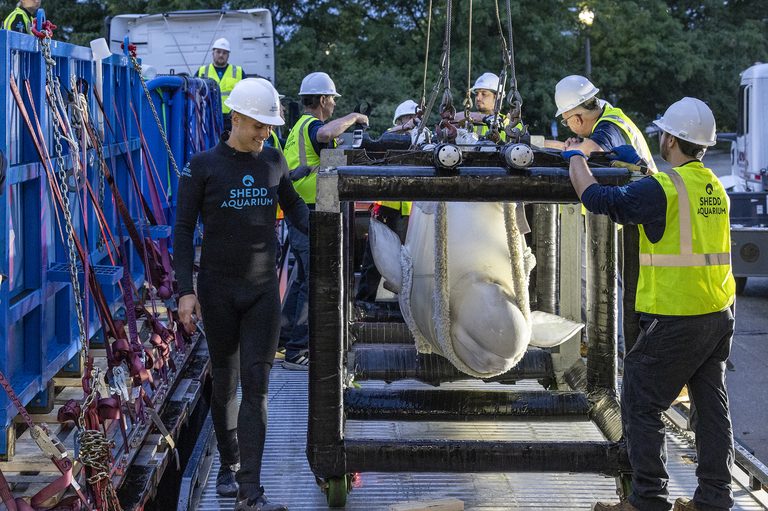
CHICAGO — The Shedd Aquarium confirmed Friday that Caspian, a 27‑year‑old female beluga rescued this summer from the shuttered Marineland marine park in Ontario, died on Wednesday. Despite intensive veterinary care, the whale’s condition continued to worsen.
Health concerns and veterinary findings
Shedd staff said veterinarians had been closely monitoring Caspian in recent weeks after noticing she was eating less than her full diet. Blood tests revealed abnormal electrolyte levels and a dangerously acidic blood pH, indicating a severe fluid imbalance. While the tests showed how critically ill Caspian was, they did not pinpoint a specific cause of death.
The aquarium announced that a necropsy will be performed to investigate any underlying diseases and to determine a definitive cause of death.
Pattern of recent beluga deaths
Caspian is the fourth beluga rescued from Marineland to die at the Shedd this year. The previous losses include Peekachu, Rain and Osiris. Another rescued beluga, Jelly Bean, recently died at the Oceanogràfic aquarium in Valencia, Spain.
Earlier this summer the Shedd received ten belugas from Marineland as part of an international effort to relocate roughly 30 whales from the facility, which closed in 2024. The aquarium has been transparent about each animal’s health status, releasing examination results for Rain and Peekachu that linked their deaths to longstanding gastrointestinal disease.
Rain’s post‑mortem showed chronic inflammation in the small intestine, liver inflammation, and tissue damage, suggesting the intestinal issue spread to the liver. Her airways also displayed chronic inflammation and signs of a resolving fungal infection.
Peekachu’s exam revealed chronic intestinal disease that likely contributed to reduced eating and declining health, along with age‑related tissue changes, high blood pressure and lung scarring consistent with a prior injury or resolved pneumonia. Outside pathology experts noted that underlying diseases may have made both whales more vulnerable to cardiovascular stress.
Osiris’s preliminary exam identified chronic liver disease; a final report is still pending.
No evidence of a shared outbreak
The Shedd has stated that it has not found evidence of a shared infectious disease or a common environmental factor linking the deaths of Peekachu, Rain and Beethoven, a longtime resident who died on September 2.
All six remaining rescued belugas at the Shedd – Secord, Gimli, and four others – are currently eating their full diets. Staff report that the whales are presenting their flukes during care sessions, allowing veterinarians to gather valuable health data, and some, including Gimli, have participated in blood draws.
Ongoing collaboration and transparency
Shedd officials emphasized their commitment to sharing observations and medical information with colleagues involved in the rescue effort. “Caspian’s loss is felt deeply by the people who knew and cared for her and by those who followed her story,” the aquarium said in a statement. “Our team worked to give her every opportunity to recover. We will share what her examination adds to our understanding with the same care and openness.”
Original reporting: Block Club Chicago — read the source article.