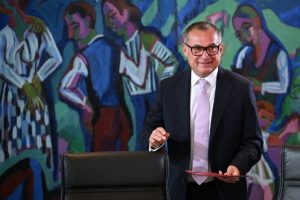
Belgrade – President Aleksandar Vučić announced on Wednesday that Serbia will hold an early parliamentary election on Oct. 25. The decree dissolving the 250‑member National Assembly paves the way for voters to decide the country’s direction amid heightened political tension.
Why the election is being called early
Vučić, who is constitutionally barred from seeking another presidential term, said the vote is necessary because of “huge turbulences” and divisions within the Balkan nation. He emphasized that the election will “clearly show the will of the people and the direction where Serbia is going.”
Background of the unrest
Large‑scale protests have roiled the capital and other cities since a tragic train‑station collapse on Nov. 1, 2024, which killed 16 people in northern Serbia. Demonstrators demand accountability for the concrete canopy failure in Novi Sad and an end to what they describe as corruption in public‑sector renovation projects. Daily rallies have sometimes drawn hundreds of thousands, marking the most sustained public dissent since Vučić first took office in 2012.
Government response and accusations
The president and his Serbian Progressive Party have faced accusations of curbing democratic freedoms and alleged ties to organized crime, claims Vučić has denied. He has accused protest leaders of seeking to “destroy the state” and warned of “foreign interference” without naming specific powers. International observers have expressed concern over reports of police violence and arbitrary detentions of protest participants.
EU relations and foreign policy
Serbia’s bid to join the European Union remains stalled under Vučić, who maintains close ties with both Russia and China. Recent EU pressure followed a public homage to war criminal Ratko Mladic, buried as a hero in Serbia despite a U.N. conviction for genocide.
Emerging opposition
A student‑backed list, often referred to as the “Students’ List,” is expected to field university professors and experts. Analysts note that this movement has gained significant support among the 6.5 million eligible voters, many of whom are disillusioned with mainstream parties. Dejan Pavlović, a political scientist at Belgrade’s Faculty of Political Sciences, compared the situation to Hungary’s recent election, suggesting a challenger could achieve a persuasive win even without extensive media backing.
Next steps
Vučić has said he will resign the presidency in the coming weeks to run for prime minister in the upcoming parliamentary race. An early presidential election will be held separately. The upcoming vote will test whether the ruling populists can retain power or if the growing opposition will reshape Serbia’s political landscape.
Original reporting: Alexandria, VA News – WTOP News — read the source article.