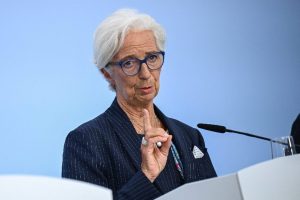
Berlin – At a European Central Bank press briefing on Thursday, Bundesbank President Joachim Nagel expressed concern over the rapid rise of far‑right parties across Europe, citing the recent state‑election victory of Germany’s Alternative für Deutschland (AfD) in Saxony‑Anhalt.
Economic implications of extremist politics
“What does this mean for our country, for our society, for the values we share? Some of these concepts are self‑defeating in an economic sense,” Nagel said, emphasizing that policy platforms that focus on curbing migration and re‑establishing ties with Moscow could undermine Germany’s reputation as a stable, open market.
He warned that such political shifts are unlikely to attract foreign investors. “Is this helpful to attract foreign investors to come to this country? Definitely not. I think they will be reluctant, they will shy away from doing business here. So yes, I’m concerned,” Nagel added.
AfD’s electoral breakthrough
The AfD surged to first place in the Saxony‑Anhalt state elections on Sunday, running on a platform that promises stricter migration controls and a closer relationship with Russia. The party’s success reflects a broader trend of far‑right gains in several European nations, raising questions about the future of liberal democratic norms and market confidence.
Analysts note that Germany’s strong export‑driven economy relies heavily on the confidence of international investors and trading partners. Any perception that the political climate is becoming hostile to open markets could translate into reduced capital inflows, higher financing costs, and slower growth.
Official response and next steps
While Nagel’s remarks were not a policy announcement, they signal the Bundesbank’s vigilance regarding political risk. The central bank continues to monitor the situation closely, working with the European Central Bank and other institutions to ensure that monetary policy remains anchored in price stability despite political turbulence.
German finance officials have reiterated their commitment to maintaining a business‑friendly environment, stressing that Germany’s legal framework and rule of law remain robust. They argue that short‑term political fluctuations should not deter long‑term investment strategies.
Broader European context
Across the continent, parties on the far‑right have made gains in recent elections in France, Italy, and the Netherlands, prompting concerns from EU leaders about the cohesion of the single market and the future of shared values.
European Commission President Ursula von der Leyen has called for a united response, emphasizing that democratic principles and economic openness must remain at the core of the Union’s agenda.
As the situation develops, the Bundesbank will continue to assess the impact of political developments on Germany’s financial stability and will keep markets informed of any significant risks.
Original reporting: Appleton, WI News Feed (HLL/CB) — read the source article.