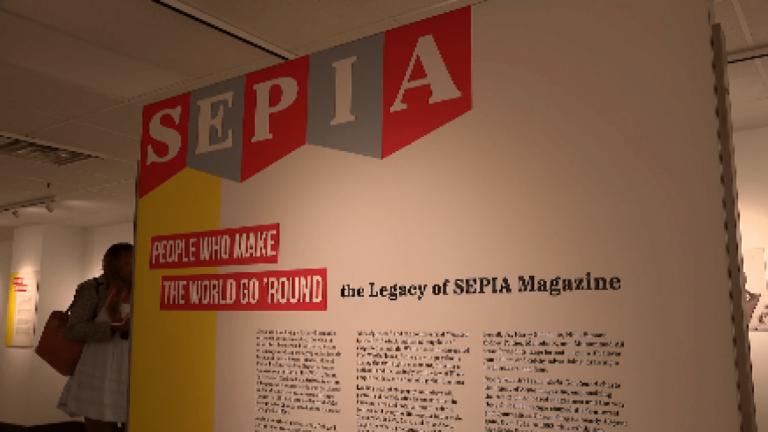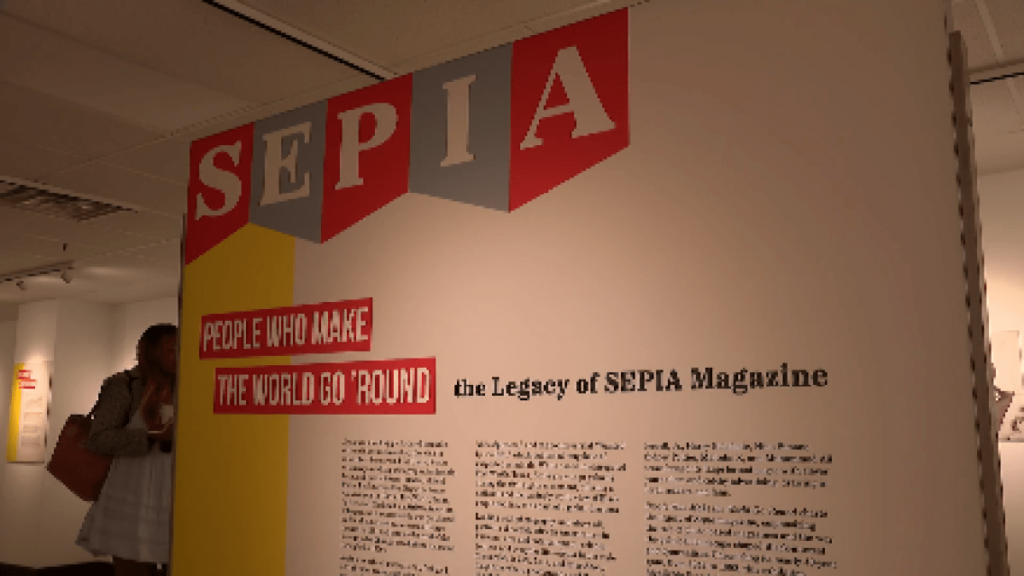
The African American Museum Dallas has opened a focused photographic exhibition drawn from Sepia Magazine’s archives, and it brings together work that traces Black life across music, sports, fashion and politics. Museum President and CEO Lisa Ross, Associate Curator Lakeem Wilson, and a contributor identified as Smith are all quoted about specific images and the larger meaning, and the show pulls 80 photos from a digital trove of roughly 40,000. The display connects Dallas and Fort Worth histories, spotlighting iconic figures like Ella Fitzgerald, Marilyn Monroe and Louis Armstrong while pointing to the wider cultural record Sepia helped create. Visitors can expect a tight, photographed narrative that places local scenes like Fair Park alongside broader midcentury achievements.
The museum framed the exhibition as a chance to see influential Black figures up close, using photography as a direct, human bridge to the past. Sepia Magazine’s pages were a rare platform in the 1940s and after, and the images on view make plain how the publication documented lives and moments mainstream outlets often overlooked. The museum selected 80 images to represent decades of coverage, choosing photos that highlight both famous faces and everyday scenes to tell a fuller story. That curatorial choice emphasizes how visual archives can reshape what a generation knows about its own history.
Lisa Ross, speaking from the museum’s perspective, pointed to a single print as a personal favorite and a powerful symbol. “One of my favorite prints is the one of Ella Fitzgerald and Marilyn Monroe,” museum President and CEO Lisa Ross said. That image ties together celebrity, cross-cultural recognition and the unique ways Black artists were photographed and celebrated during the 20th century. By elevating that print, the exhibit nudges visitors to read familiar names through a different lens, one that centers Black achievement and visibility.
Sepia Magazine itself began in Fort Worth in the 1940s and grew a reputation for covering things other outlets ignored or underplayed. It turned its pages toward sports heroes, musicians, fashion innovators and political actors in Black communities, creating an archive of moments that matter. “When I found out that this magnificent work started in Fort Worth? I was astounded,” Smith said. That local origin is part of the show’s charm, tying a regional publishing history to a city museum effort in Dallas.
The museum’s photographic holdings are large and digital, a fact the curators used to build a concise but potent exhibit. The 80 photos on display were chosen from a collection that numbers about 40,000 images, which gives the show a selective, intentional feel rather than a scattershot survey. Each print on the walls carries layers: a subject, a photographer’s eye, and the social context Sepia tried to preserve. Walking through the gallery becomes a lesson in how selection and curation can amplify stories that would otherwise sit in an archive unseen.
One photograph that caught staff attention shows Louis Armstrong performing at Fair Park, a local moment lifted into the national story of jazz and cultural life. “To see Louis Armstrong performing right here at Fair Park was mind-blowing,” Associate Curator Lakeem Wilson said. That single picture does more than record a concert; it remaps a place, reminding viewers that world-class artists passed through Dallas venues and left traces on the city’s cultural landscape. The image anchors the show in a recognizable spot while pointing to larger artistic currents.
The museum positions itself as more than a repository; it wants to be an active storyteller and educator for future generations. “The African American Museum is the custodian of millions and millions of stories,” Ross said. “This is what this is.” Those lines underline the museum’s mission to preserve and present, and the words suggest why photo collections like Sepia’s matter beyond nostalgia—they provide mirrors and roadmaps for young people. The exhibit is meant to show possibility, not just to catalog fame.
The curators are clear the themes Sepia covered remain relevant, and they encourage families and schools to visit with purpose. “It’s not important, it’s essential,” Ross said. “It’s also essential for children and youth to see what they can become. Come to this museum to see what’s possible.” That call to action reframes an archival show as a civic resource, one that uses historical imagery to spark imagination and ambition. The exhibition invites viewers to stand face to face with history and to recognize the continuity between past achievement and present potential.