In the latest midterm results, the Democratic Party secured a majority in the U.S. Senate, ending two years of Republican control of the chamber. The flip came after Democratic challengers won in North Carolina, Ohio, Iowa, Texas, South Carolina and Kansas – states where President Trump personally campaigned for GOP candidates.
Trump’s Direct Involvement and Response
President Trump spent the final weeks of the campaign traveling to traditionally conservative states, urging voters to “pretend I’m on the ballot” and warning that a Democratic‑led Congress would threaten American prosperity. In a Fox News interview aired early Wednesday, he shifted blame to Democratic campaign efforts, saying they “did a good job” and that GOP candidates bore responsibility for the losses.
Key Races and Candidate Outcomes
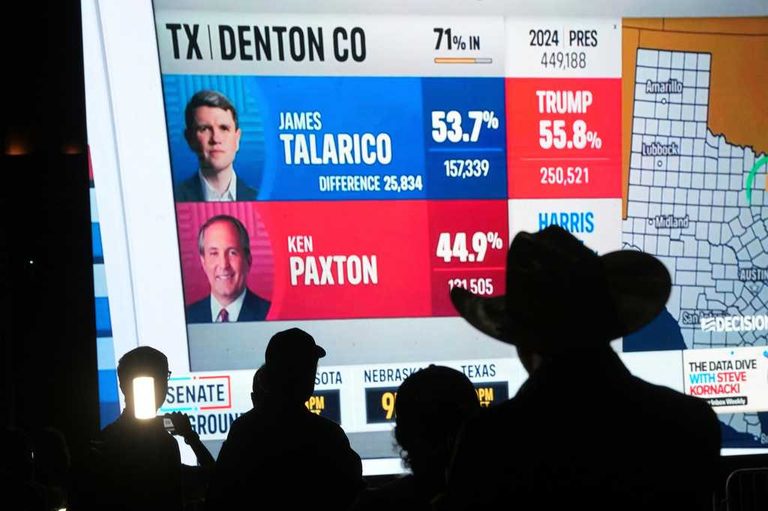
In South Carolina, Republican Darline Graham, sister of the late Sen. Lindsey Graham, lost to Democrat Annie Andrews after questions about her experience surfaced. Texas saw the defeat of Republican Ken Paxton, who had been impeached by his own party over corruption allegations and was entangled in a public divorce; he fell to Democrat James Talarico despite President Trump’s endorsement over incumbent Sen. John Cornyn.
President Trump’s backing of Michael Whatley in North Carolina could not prevent Democrat Roy Cooper from winning the seat after incumbent Sen. Thom Tillis retired amid clashes with the president. In Kansas, Democrat Adam Hamilton defeated Republican Roger Marshall, while in Ohio, Democrat Sherrod Brown reclaimed his Senate seat, beating appointed Republican Sen. Jon Husted, a candidate whose physical appearance Trump repeatedly praised during rallies.
Poll Snapshot Shows Economic Discontent
The AP Voter Poll, an extensive survey of the midterm electorate, found that roughly two‑thirds of voters believe President Trump’s policies have worsened the national economy, while only about three‑in‑ten say conditions have improved. A similar two‑thirds view the president’s tariff strategy as harmful to both the national and local economies.
More than half of respondents expressed negative views of President Trump’s leadership, citing concerns about his priorities and mental capacity. About six‑in‑ten voters felt he places personal interests above the country’s, whereas four‑in‑ten believed he prioritizes national interests.
Implications for the Trump Administration
With Democrats now controlling the Senate, the administration can expect increased oversight, potential obstruction of legislative priorities, and heightened scrutiny of nominations to the Cabinet and federal judiciary. President Trump has signaled a “strong veto” stance and posted a photo of his signature red cap emblazoned with the word “VETO.”
Democratic leaders have already outlined investigative priorities, including the administration’s handling of the Jeffrey Epstein investigation, alleged corporate corruption, and the Trump family’s business dealings. Control of Senate committees will grant them larger budgets, staff, and subpoena authority, which could compel the White House to respond to congressional requests.
Local Impact and Voter Sentiment
While the Senate shift is a national development, its effects will be felt in local communities across the country as federal policy direction changes. Voters in the affected states expressed frustration with rising diesel prices and the ongoing tariff war, issues that directly impact small businesses and family budgets.
President Trump remains confident in his base, emphasizing that opposition parties serve as a foil that strengthens party unity and fundraising. Nonetheless, the election outcomes underscore a broad desire among the electorate for a different direction on economic and foreign‑policy matters.
Original reporting: KOAT Albuquerque — read the source article.