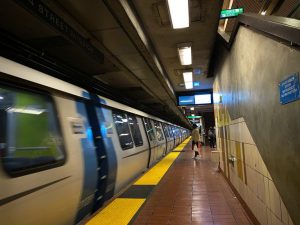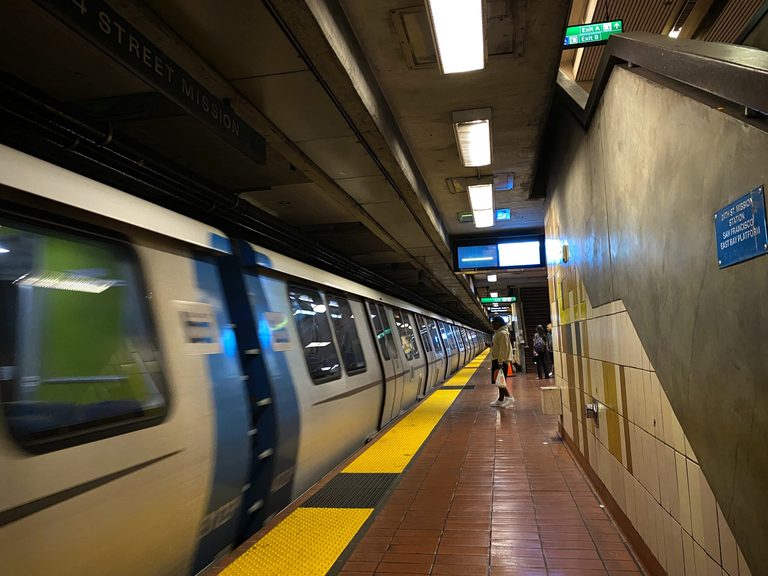
San Francisco commuters who rely on the 24th Street BART station’s only elevator faced a lengthy disruption when the lift was out of service for 94 days. The elevator, located at the southwest plaza and connecting street level to the station entrance, closed on July 13 for emergency repairs and did not resume operation until Oct. 15.
Impact on wheelchair users
Wheelchair user Pete Bendix, who travels from his home near Glen Park to the 24th Street station three days a week, described the inconvenience. With the elevator unavailable, he must take the 14 or 49 bus up a steep hill, adding up to 15 minutes each way to his commute. “It takes time and it’s a little bit dangerous. I’m very careful, it’s quite steep,” Bendix said. “Above all, it just takes a lot of time.”
Repeated deadline extensions
Initial communications indicated the elevator would be repaired by Aug. 10, but that deadline was missed. The target date was pushed back five times before the elevator finally returned to service on Oct. 15, more than three months after the outage began.
Background: 2024 BART settlement
In 2024, BART entered a settlement that required the agency to fix or upgrade 75 elevators over the next 15 years, avoid scheduling routine maintenance during peak commute hours, and notify the public within 15 minutes of an outage. The agreement also mandated two annual compliance reports. The settlement was intended to address a 2017 class‑action lawsuit that alleged systemic civil‑rights violations in BART’s elevator maintenance.
Compliance questions
Legal Aid at Work attorney Rosie Bichell, who monitors the consent decree, noted that the settlement defines “reasonable best efforts” in a way that gives BART considerable flexibility. While no formal violations have been recorded, Bichell said a three‑month outage is “pretty concerning” and must be evaluated case‑by‑case.
Disability Rights Education & Defense Fund executive director Michelle Uzeta pointed out that the Americans with Disabilities Act requires transit agencies to keep accessible features in working order and to repair them promptly. However, she added that there is no bright‑line rule for what constitutes an ADA violation, and factors such as outage length, frequency, cause, and repair speed all matter.
Reasons for the delay
BART officials explained that the repair work was complex. The contractor experienced a family emergency that halted work for two weeks. The repair required specialized equipment to address an aging jack nearly 40 feet underground, replace a hydraulic tank unit, and install a submersible pump and motor. Two state inspections also needed a two‑week advance notice, and workers did not perform overtime.
Broader outage record
According to BART data obtained by Mission Local, the 24th Street elevator has been out of service for a total of 98 days since January, representing roughly one‑third of the year for wheelchair users who depend on it. The agency’s latest report shows that response times for elevator outages between Dec. 2025 and May 2026 met the one‑hour goal set in the settlement, but the prolonged outage at 24th Street remains a point of concern.
Looking ahead
Bendix expressed hope that the elevator will remain operational and that future breakdowns will be avoided. He welcomed the recent restoration and urged BART to continue improving its accessibility infrastructure.
San Franciscans can track current BART elevator status via the agency’s website, the BART app, a text‑message service, or the dedicated hotline at (510) 834‑LIFT.
Original reporting: Mission Local — read the source article.