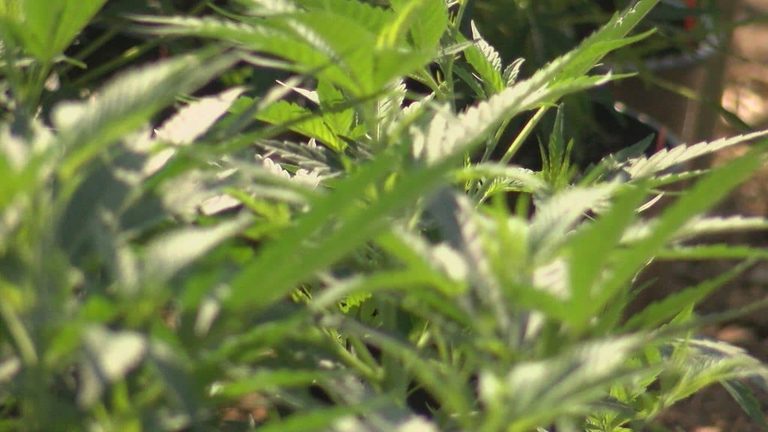
Frankfort, KY – Kentucky hemp growers are facing a looming crisis as a new federal law scheduled for November 12 will reclassify many legal hemp products as Schedule I controlled substances. The change would effectively ban those products nationwide, leaving farmers with unsellable inventory and potential financial loss.
Chuck Tackett, a hemp farmer from Georgetown, illustrated the impact. He still has both last year’s harvest and this year’s crop on hand with no buyers in sight. “There’s nobody buying right now. So, we’re sitting with last year’s product and there’s a lot of labor involved in this. This is a hand‑planted crop,” Tackett told LEX News earlier this summer.
Because only Congress can amend the federal classification, Kentucky’s two congressional representatives have offered competing approaches. Sen. Rand Paul was the first to propose a fix that would return regulatory authority to the states. He highlighted Kentucky’s existing measures, such as age‑restricted sales of THC‑containing drinks in liquor stores, as a reasonable framework.
“The Kentucky State legislature came forward with laws to regulate hemp. The drinks that have some of the THC in – you have to be 21 years old, you have to do it in a liquor store. I think those are reasonable regulations and I’d like to let Kentucky regulate it instead of completely prohibiting it,” Paul said.
Rep. Andy Barr, meanwhile, is pushing for a federal regulatory framework that would standardize hemp product rules across all states. While the two lawmakers differ on the path forward, both agree that action is needed before the November deadline.
Sen. Paul emphasized his willingness to back any legislation that removes the ban and protects Kentucky’s hemp industry. “Anything that eliminates the ban – I’ll be for,” he affirmed.
The pending federal rule threatens not only individual farms but also the broader Kentucky agricultural economy, which has seen rapid growth in hemp cultivation over the past several years. If the ban takes effect, farmers could face wasted crops, lost jobs, and reduced tax revenue for the state.
State officials have not yet indicated whether they will introduce complementary legislation at the Kentucky General Assembly, but the discussion underscores the tension between federal drug policy and state‑level agricultural regulation. Local growers and industry groups are expected to lobby both Washington and Frankfort in the coming weeks.
What’s at stake for Kentucky families
Many hemp farms are family‑owned operations that rely on the crop for income and employment. The potential loss of market access could force some families to cut back on labor, reduce farm acreage, or even cease production altogether. Advocates argue that allowing states to set their own standards respects the Constitution’s allocation of powers and protects parental rights to support family livelihoods.
As the November deadline approaches, Kentucky’s agricultural community watches closely for any legislative movement that could avert the ban and preserve the state’s growing hemp sector.
Original reporting: WTVQ (Lexington) — read the source article.