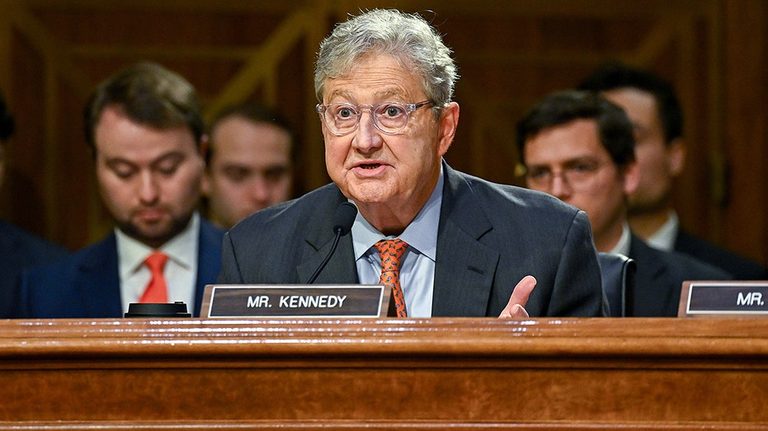
Republican Sen. John Kennedy (R‑LA) used his appearance on CBS News’ Face the Nation to propose a new rule that would bar any living public official from having a federal building named after them. Kennedy said the move was necessary because officials, including President Trump, should not “spend public money on private ads for themselves.”
Trump’s Ongoing Renaming Campaign
Since returning to the White House last year, President Trump has repeatedly sought to attach his name to prominent federal sites. The most visible effort has been an attempt to rename the John F. Kennedy Center for the Performing Arts after himself. A Trump‑appointed board briefly added his name to the Center’s façade, but a federal judge ordered its removal, noting that only Congress has the authority to change the Center’s name.
Other recent proposals include adding Trump’s name to the U.S. Institute of Peace, a suggestion that former institute officials—removed by the Trump administration—have fought in court. The president has also floated naming New York’s Penn Station and Washington‑area Dulles Airport after himself as part of a funding deal, and he has mentioned a “Trump Promenade” linking the Lincoln Memorial to the Potomac River.
Senator Kennedy’s Response
Kennedy argued that allowing living officials to rename public landmarks creates a dangerous precedent of self‑promotion with taxpayer dollars. “I may end up with a sombrero on my head,” he joked, referencing Trump’s recent AI‑generated videos that mocked Senate Minority Leader Chuck Schumer and House Minority Leader Hakeem Jeffries. “But I think we ought to have a rule that no politician can have a building named after him when he’s alive.”
The senator’s proposal aligns with a broader conservative principle that government should not be used as a personal billboard. He emphasized that the White House may view the issue differently, but stressed the importance of preserving the integrity of public institutions.
Critics and Context
Critics of the president’s renaming efforts include the federal judges who ordered the removal of his name from the Kennedy Center and the former officials of the Institute of Peace who filed a motion to block the addition of his name to that building. These opponents are identified as members of the judiciary and former agency staff, respectively, and their objections are rooted in legal authority rather than partisan bias.
Supporters of the president argue that naming landmarks after a sitting president can honor his contributions and inspire patriotism. President Trump himself has said the proposed “Trump Promenade” would be “beautiful” and reflects a desire to recognize American leadership.
What Comes Next?
Senator Kennedy’s suggestion would require congressional action to become law, a hurdle that reflects the Constitution’s allocation of naming authority to the legislative branch. If passed, the rule would apply to all federal facilities, effectively ending any current or future attempts by a sitting official to rename a building after themselves.
For now, the debate continues in the halls of Congress and the courts, with the Trump administration pressing forward on its branding agenda while opponents cite legal precedent and the principle of modest public service.
Original reporting: Fox News (HLL/CB) — read the source article.