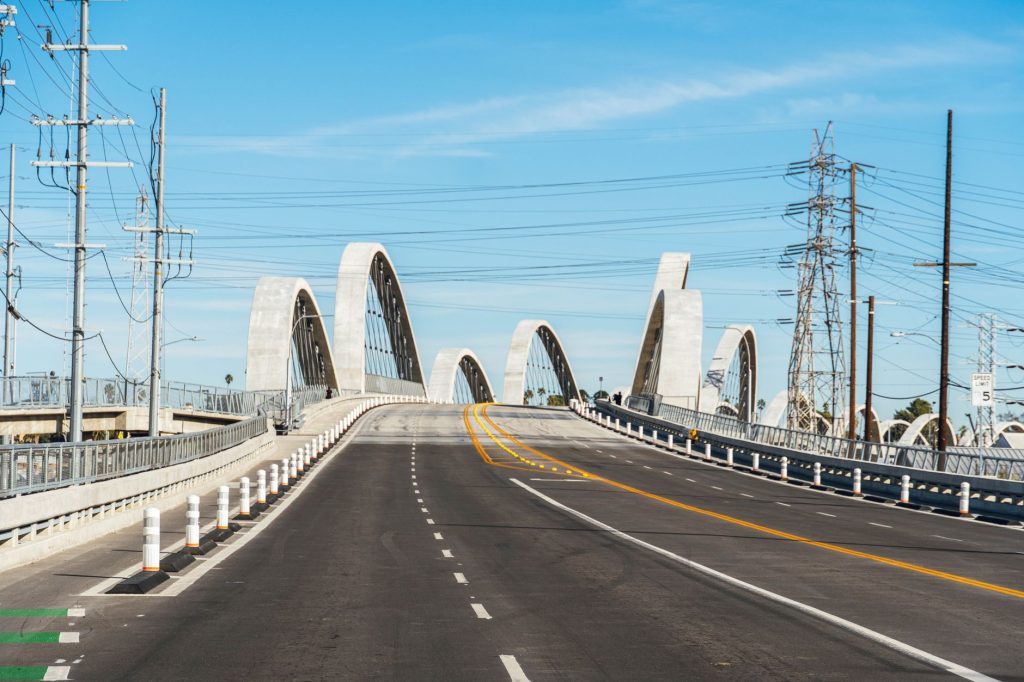
The 4th Street Bridge — technically the Cesar E. Chavez Avenue Viaduct, though almost nobody calls it that — has appeared in more films than most working actors. Grease, Terminator 2, To Live and Die in L.A., Gone in 60 Seconds, and about forty other productions have used its arches as a backdrop. The bridge has been blowing up on screen since 1931. You’ve seen it. You just didn’t know it was sitting right there on the edge of Boyle Heights and the LA River.
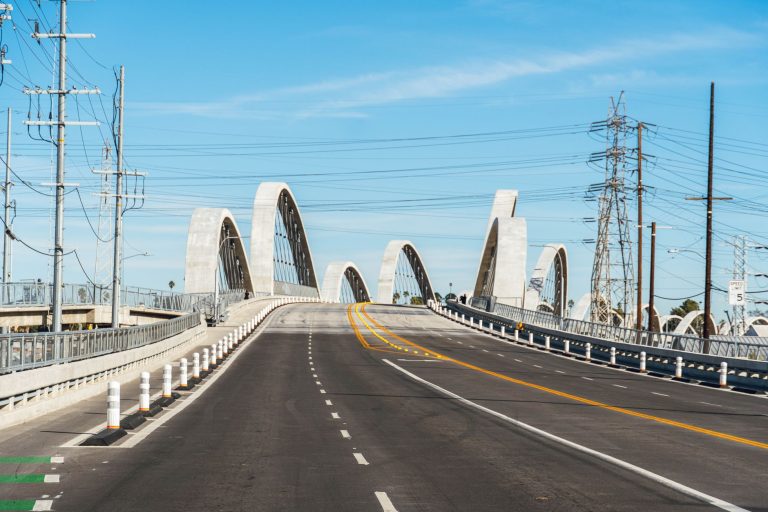
Built in 1931 and stretching roughly 1,500 feet across the concrete channel of the Los Angeles River, the bridge is a Beaux-Arts piece of city infrastructure — which is a phrase that sounds fancier than the experience. In practice, this means wide ornamental arches, decorative lampposts that look like they belong in a period movie (convenient, given the resume), and a sidewalk wide enough to walk across comfortably without sharing elbow room with traffic. The whole thing was added to the National Register of Historic Places in 2011. That delayed recognition is very on-brand for East L.A.
There’s no entrance fee, no hours, no ticket booth. You just walk there. From the Boyle Heights side, park near 4th Street east of the river and approach on foot. The view looking west toward downtown is the one that ends up in photographs: the skyline framing the arched spans, late-afternoon light hitting the concrete at a low angle, the occasional freight train threading through the river basin below. Go around 5 p.m. on a weekday if you want the light without a crowd. Weekends draw more people with cameras, which is fine, but the pedestrian lane gets congested.
What makes it worth a deliberate visit rather than just a drive-through backdrop is the scale. Walking the full crossing takes maybe ten minutes at a casual pace, and the river views from the midpoint — east and west both — give a sense of how industrial and yet somehow dormant the LA River corridor still feels here. The revitalization projects concentrated further north haven’t fully arrived. Down here it’s quieter, wider, more honest about what the river actually is in this part of the city.
If you’re combining this with something to eat, Guisados on 1st Street is close, as are several spots along Cesar Chavez. The bridge itself doesn’t have a café or a gift shop, obviously. It has lampposts and arches and a long concrete span over a concrete river, and the city skyline in the distance, and about ninety years of movie appearances baked into the stonework. That’s the whole offer. It’s enough.
Don’t bother driving across expecting to appreciate it — you’ll miss everything and just hit traffic on the far side. The point is to walk it, ideally in the late afternoon, ideally without rushing. It costs nothing, takes twenty minutes round trip, and gives you a cleaner understanding of how East L.A. sits in relation to downtown than any map will.