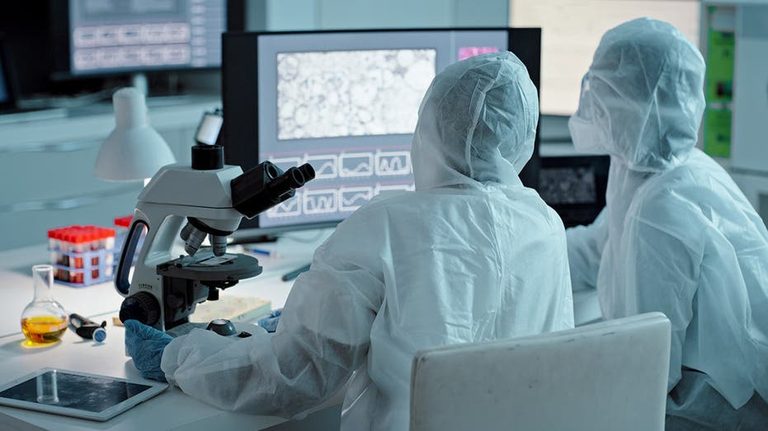
Scientists at the University of Minnesota have made a significant breakthrough in the field of bioengineering by creating a synthetic cell that can grow, replicate its genetic material, divide, and even pass beneficial traits to future generations.
What is a Synthetic Cell?
The synthetic cell, called SpudCell, was assembled from nonliving components and has a 90,000-base-pair genome that enables it to produce proteins, replicate its DNA, feed, grow, and divide into daughter cells.
While the synthetic cell is not yet capable of surviving outside carefully controlled laboratory conditions and requires externally supplied nutrients and specialized components to grow and divide, the researchers believe that this work represents a major step toward building artificial life.
The team also introduced a genetic mutation that allowed some synthetic cells to grow faster than others, demonstrating a basic form of natural selection.
Implications and Future Work
The researchers acknowledge that the system remains far less capable than even the simplest living cells, but they believe that this work could eventually provide a foundation for fully artificial organisms designed for biotechnology applications.
Future work will focus on making synthetic cells more self-sufficient by regenerating more of their own molecular machinery, improving how genomes are distributed during cell division, and allowing mutations to arise naturally rather than being introduced by researchers.
Original reporting: Fox News (HLL/CB) — read the source article.