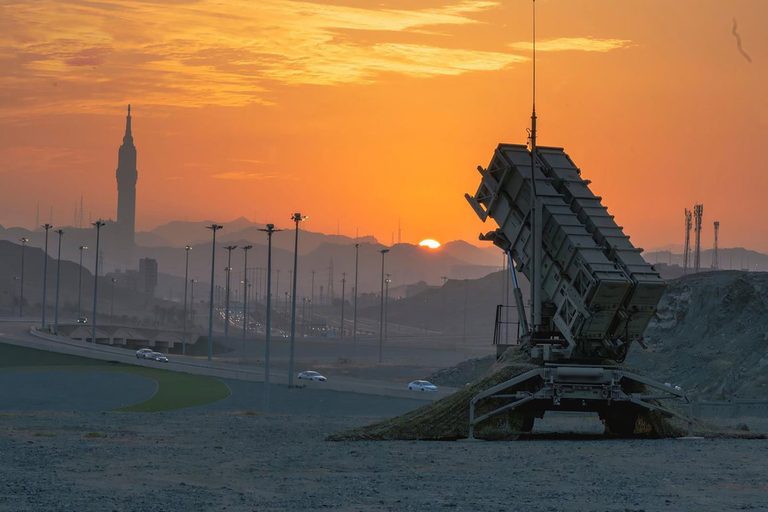
Saudi Arabia, a longtime strategic partner of the United States, spent $83 billion on defense last year, ranking among the world’s top ten military spenders, according to the Stockholm International Peace Research Institute. Yet the kingdom continues to grapple with lethal attacks on critical sites such as Riyadh’s main airport, oil refineries and pipelines.
Advanced weapons, still vulnerable
The Saudis have acquired modern fighter jets, Patriot and THAAD air‑defense systems, and a range of European weaponry. Despite this, Houthi militants from Yemen have launched a series of missiles and semi‑automatic rifles‑carrying drones that have penetrated the multi‑layered defenses. Over the past week, the capital’s airport suffered deadly strikes, prompting residents to temporarily homeschool their children and demand better civil‑defense alerts.
Three‑front threat landscape
Geographically, Saudi Arabia faces threats on three sides. From the east, Iran launched roughly 1,000 missiles and drones at Saudi targets during the year’s most intense period. From the north, Iranian‑backed militias in Iraq have targeted the kingdom’s critical east‑west oil pipeline with drones. From the south, the Iran‑backed Houthi rebels fire missiles from mobile launchers hidden in Yemen’s mountains.
Houthi tactics evolve
The Houthis have begun combining ballistic and cruise missiles with long‑range drones, a strategy reminiscent of Russia’s mass‑drone barrages in Ukraine. New generations of missiles, such as the Hatem‑2 and Palestine‑2, are reportedly maneuverable and capable of low‑altitude flight, making them harder to detect. Analysts note that some missiles have evaded even Israel’s sophisticated air‑defense network.
External support fuels the conflict
UN experts have documented that Iranian‑origin weaponry and unmanned aerial vehicles have been smuggled into Yemen despite an international arms embargo. The scale of material transfers, including financial support and combat training, is described as “unprecedented.” The Houthis also claim to have modified Iranian air‑defense weapons to strike aircraft and cruise missiles.
Saudi response and challenges
Saudi officials acknowledge that while many threats are intercepted, some still get through. The defense ministry faces difficult choices in allocating limited systems across a sprawling network of vulnerable installations. Civil‑defense alerts were briefly halted, causing public frustration, but have since resumed after resident complaints.
Implications for regional stability and investment
Continued attacks threaten not only the oil sector but also data centers, desalination plants and tourism infrastructure—key pillars of Crown Prince Mohammed bin Salman’s Vision 2030. The upcoming investment summit in Riyadh will test the kingdom’s ability to reassure international investors amid ongoing security concerns.
U.S. involvement
Last year the United States conducted a seven‑week air‑strike campaign costing more than $1 billion against the Houthis, aiming to protect shipping in the Red Sea. While the strikes reduced attacks on U.S. vessels, they did not eliminate Houthi capabilities, and several advanced U.S. Reaper drones were shot down.
Looking ahead
Experts say a ground offensive by Yemeni government forces is unlikely to succeed given the Houthis’ entrenched positions and familiarity with the rugged terrain. Diplomatic avenues remain limited; Iran has offered to mediate, but the Houthis have rejected recent truce proposals. The kingdom must balance intensified air‑strikes with the risk of further retaliation that could undermine its economic diversification goals.
Original reporting: KEYT (Ventura/Santa Barbara) — read the source article.