My neighbor kept telling me to go. “Just go on a Saturday,” she said, “before it gets crowded.” She was talking about the Canyon County Historical Society Museum — no, wait, that’s excluded — she meant the Idaho Heritage Trust’s preserved Oregon Short Line Depot experience, but let me tell you what I actually spent a Saturday morning doing: walking through the Nampa Train Depot grounds and surrounding Railroad District, which feels entirely different depending on what time you show up.
I got there around 9 a.m. in late October, one of those mornings where the valley fog hadn’t burned off yet and the old red brick of the depot almost glowed against the gray. The 1903 Oregon Short Line Depot on Front Street is not a functioning train station anymore, but it’s not quite a museum in the sit-down-and-read-placards sense either. It’s more of an anchor — a building that makes you stop and actually look at a neighborhood. The Richardsonian Romanesque architecture, those heavy arched windows and rough-cut stone trim, is unusual enough that even people who grew up in Nampa tend to do a double-take when they finally slow down to notice it.
The building has been used for various civic and event purposes over the years, and on the Saturday I visited, there was a small community event set up in the adjacent space — vendors selling local pottery and dried flower arrangements, a couple selling kettle corn out of a trailer. It wasn’t advertised heavily anywhere I could find online, which made it feel like something you either knew about or stumbled into.
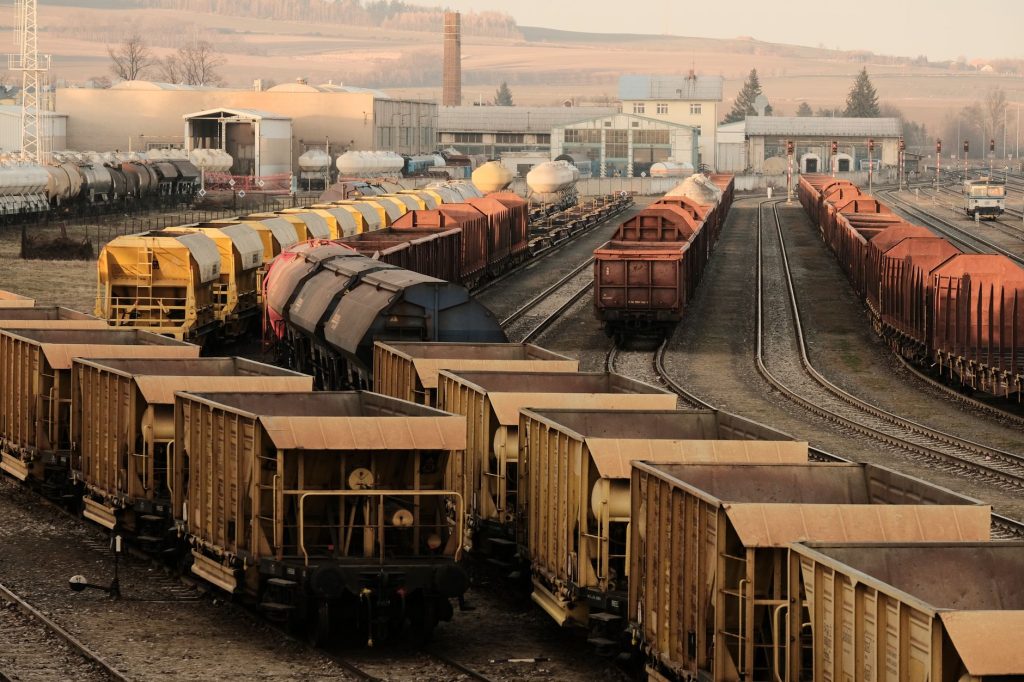
What I actually spent most of my time doing was just walking the immediate blocks around the depot. The Rail District has been slowly accumulating character — a few repurposed warehouses, some murals that aren’t part of any official art walk, a coffee window operation running out of what looked like a converted freight bay. I grabbed a cup there, didn’t catch the name, paid three dollars, and stood in the gravel lot looking back at the depot roof line while a freight train — an actual working freight train — rumbled through on the adjacent tracks about fifty yards away. That part surprised me. I’d forgotten this is still an active rail corridor.
There’s no admission fee to walk around the exterior grounds, and the depot itself is intermittently open for public events — checking the City of Nampa’s events calendar before you go is worth the thirty seconds. When it is open, the interior retains a lot of its original woodwork and tile, and the scale of the waiting room is bigger than you’d expect for a city Nampa’s size in 1903, which tells you something about how significant the railroad was to this valley’s early growth.
If you’re the kind of person who gets interested in the economic logic of how a place became what it is, this area rewards that curiosity. The depot sits at the intersection of the agricultural and commercial history of Canyon County in a way that’s genuinely readable from the street — you can see how the town organized itself around freight and passengers moving through. That’s not something most Western cities have held onto as visibly as Nampa has.
I stayed about two hours total, including the wandering. Wore good walking shoes. Bought a small ceramic bowl from one of the vendors for twelve dollars. Went home and looked up the depot’s construction history, which is what a place like this is supposed to make you do.