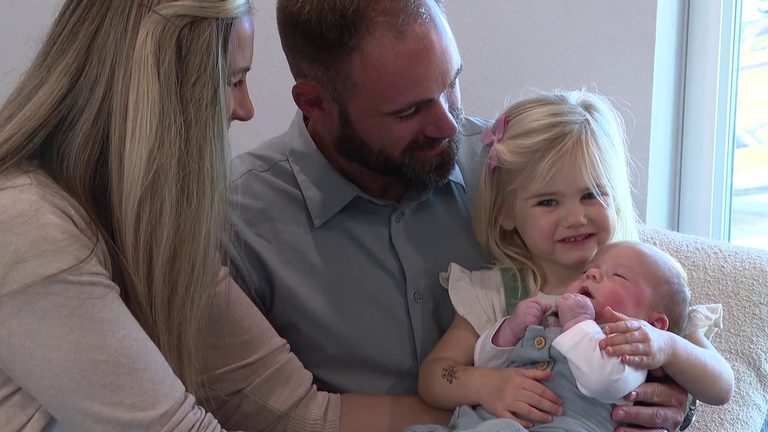
When a 20‑week ultrasound in Nokomis, Fla., showed that their unborn son had spina bifida, Lauren and Sean Hearn faced a frightening diagnosis. Spina bifida is a birth defect in which the spine and spinal cord do not form correctly, potentially leading to paralysis, brain swelling, and bowel problems.
Seeking a pioneering solution
Lauren Hearn, a former neuro‑intensive‑care nurse, and her husband quickly consulted their obstetrician, Dr. Matsumoto, who recommended a consultation at Texas Children’s Hospital. Within days the family flew to Houston, where they met Dr. Michael Belfort and Dr. William Whitehead, the surgeons who have refined a fetoscopic technique for repairing the defect before birth.
Dr. Belfort, chair of obstetrics and gynecology at Baylor College of Medicine, explained the goal: “If you operate on a baby before it’s born, you can actually prevent some of the damage. None of this is a cure, you’re not going to reverse whatever damage is there, but you can prevent and halve the number of kids that need a shunt and double the number of kids who walk unaided.”
The five‑hour operation
During the procedure, surgeons made small incisions in Lauren’s abdomen, inserted ports, and closed the spinal lesion while the baby remained in the womb. The technique also preserves the mother’s ability to deliver naturally.
Home recovery and early signs of hope
Lauren returned to Sarasota County and gave birth to Theo nearly two months ago. While long‑term outcomes remain uncertain, the Hearns report encouraging progress. “We are really hopeful with the way Theo is presenting. He’s doing amazing, and he’s just completely blown us away with how well he’s doing,” Lauren said.
The family’s 2‑year‑old daughter, Olivia, is already a supportive big sister, and the household is adjusting to the new routine with optimism.
Gratitude for the medical team
Sean Hearn praised his wife’s resilience, calling her “a beam of light” during the challenging weeks. Both parents expressed deep gratitude to the anesthesia, maternal‑fetal medicine, and surgical teams at Texas Children’s Hospital. “They don’t have a crystal ball. They can’t determine exactly how this will turn out, but they’re still willing to risk it all to better the future,” Lauren said.
Dr. Belfort echoed the emotional impact of each successful repair, noting that families often send videos showing dramatically improved quality of life. “It makes me want to cry. It is remarkable, and you never get used to that,” he said.
Supporting other families
Lauren Hearn is now using her experience to help other parents facing a spina bifida diagnosis. She emphasizes the importance of attending all prenatal appointments and ultrasounds, which made early detection possible. Parents can contact her at [email protected] for guidance.
“You will be tested mentally, physically and emotionally, and it will work out better than you could ever imagine. When you get to the other side, you’ll be grateful for every moment,” Lauren added.
Original reporting: Tampa Bay Florida News (HLL/CB) — read the source article.