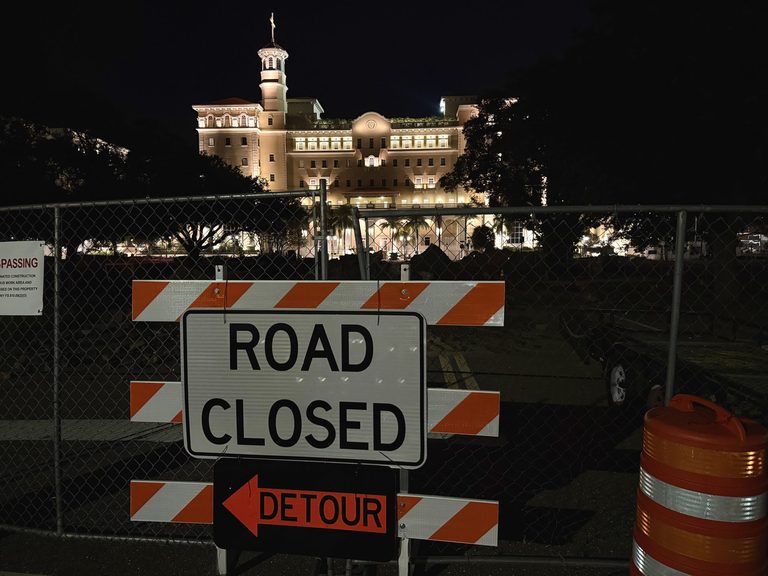
Clearwater, Fla. – After a heated city‑council meeting on Nov. 5, local officials voted 3‑2 to reject the Save the Garden petition that sought to keep South Garden Avenue open to the public. Council members referenced a Florida statute that bars public referendums on specific development actions, deeming the petition unlawful.
Petition background
Save the Garden, a grassroots organization, gathered more than 10,000 signatures, with 7,577 verified by the Pinellas County Supervisor of Elections in October—well above the threshold required by the city charter for a special election. The group argues that the city violated its charter by refusing to repeal the ordinance that would vacate the street for the $250 million L. Ron Hubbard Hall project.
Council’s rationale
During the November 5 meeting, council members who voted against the petition cited the state law that restricts public votes on certain development decisions. The Council’s position aligns with guidance from the Florida Attorney General, which the Church of Scientology also cited in a statement supporting the council’s action.
Responses from both sides
Brooks Gibbs, campaign director for Save the Garden, emphasized that the group’s effort is not driven by animosity toward Scientologists but by a desire to preserve public streets for Clearwater residents.
“All of our efforts are not for the hatred of Scientologists or Scientology. It is truly for the love of Clearwater. We want to keep the streets open for the public,” Gibbs said.
The Church of Scientology welcomed the council’s decision, stating that the petition is unlawful under Florida law and that the L. Ron Hubbard Hall development will proceed.
“The Council has acted in accordance with legal guidance, upholding its lawful approval of the Garden Avenue vacation. The law has prevailed,” the church said.
Legal next steps
Save the Garden is now seeking a swift court ruling. Under the city charter, a special election must be held within 90 to 150 days of petition certification. The petition was certified on Oct. 13, setting a potential election deadline of March 12, 2027, should the lawsuit succeed.
The city did not respond to requests for comment at the time of publication.
Original reporting: Tampa Bay Florida News (HLL/CB) — read the source article.