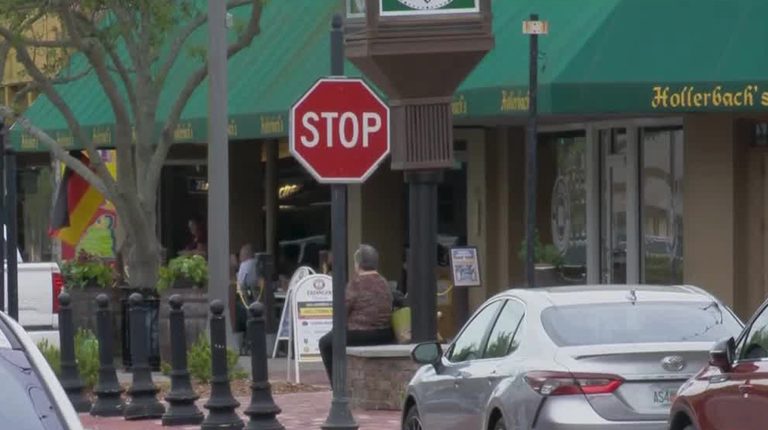
Sanford city commissioners are evaluating a proposal to introduce limited paid parking in the downtown core, targeting streets with the highest demand. The discussion, held at the recent commission meeting, emphasized that any new fees would be confined to specific high‑traffic corridors and would follow a “pay‑by‑plate” or “pay‑by‑app” system.
Current focus: enforcing existing rules
Before moving forward with a paid‑parking scheme, commissioners stressed the need to improve enforcement of the current two‑hour parking limit. City staff have been directed to work closely with downtown businesses to develop clearer enforcement strategies and to explore options for reserving spaces for downtown employees.
Background on parking demand
A 2020 parking study commissioned by the city projected that parking demand would continue to rise as new development proceeds. The study found that employees and residents were increasingly occupying prime parking spots, making it harder for shoppers and visitors to find available spaces. The study also warned that surface parking alone would not suffice to meet future needs.
Potential paid‑parking locations
The commission identified First Street, Second Street, Sanford Avenue and several nearby secondary streets as candidates for limited paid parking. Mayor Art Woodruff described the proposal as a “recommendation for limited paid parking” in “high‑demand areas,” emphasizing that any implementation would be selective rather than citywide.
Employee‑only parking considerations
Commissioner Patrick Austin suggested that the city could set aside certain spots for downtown employees, using stickers to designate employee‑only spaces. “I would like to explore what we could do with some of the spaces we have now,” Austin said, noting that this could alleviate pressure on public parking while supporting local workers.
Community response
Some residents expressed concern about the prospect of paying for downtown parking. Long‑time resident Jordan Alvernia, who frequently uses a golf cart to navigate downtown, said that additional fees would be an unfair burden, especially since golf‑cart owners already pay an annual permit fee.
Potential revenue impact
Consultants hired by the city estimate that a limited paid‑parking program could generate more than $1 million in annual revenue if implemented. While the revenue potential is notable, commissioners agreed that the primary goal remains improving parking availability and enforcement for all downtown users.
Next steps
The commission has tasked city staff with continuing the dialogue with downtown merchants, refining enforcement tactics, and developing a framework for employee‑only parking. Any decision on a paid‑parking program will be revisited after these preliminary measures are in place.
Original reporting: WESH Orlando — read the source article.