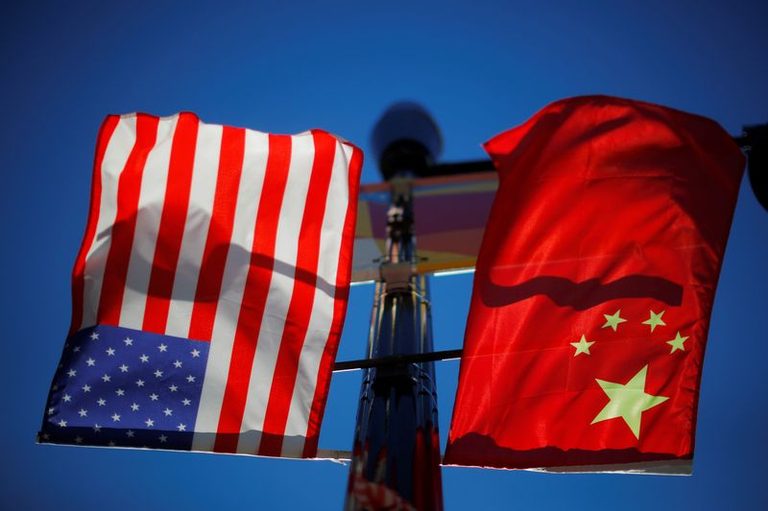
China’s foreign ministry stepped into the spotlight on Tuesday, urging the United States to cease expanding its military presence in outer space. Spokesperson Guo Jiakun told a regular press briefing that Beijing opposes the weaponization of space and the creation of a “war zone” beyond Earth’s atmosphere.
U.S. acknowledgment of space weapons
U.S. Secretary of the Air Force Troy Meink announced on Monday that the United States possesses “on‑orbit space control weapons capable of defending the Joint Force against hostile adversary action.” Meink did not provide details about the specific systems, marking the strongest public acknowledgment yet from a Pentagon official that the United States has weapons deployed in orbit.
Chinese concerns about a space arms race
State‑run Global Times described the admission as evidence of Washington’s pursuit of “space hegemony” and warned that it could fuel a global space arms race. Military analyst Song Zhongping, quoted by the newspaper, said the disclosure signals a shift from protecting space assets and relying on ground‑based counter‑space systems to directly placing weapons in orbit.
“If the U.S. continues down this path, other countries may be forced to respond,” Song warned, echoing concerns that a competitive buildup could destabilize strategic stability worldwide.
China’s diplomatic stance
Guo reiterated Beijing’s opposition to turning space into a battlefield, urging the United States to take concrete actions that uphold global strategic stability. The Chinese foreign ministry has consistently called for restraint and cooperation in the domain, emphasizing that space should remain a peaceful arena for scientific and commercial activity.
U.S. perspective on space security
Meink’s statement reflects a broader Pentagon strategy that views space as a contested domain essential to national defense. The department argues that having defensive capabilities in orbit is necessary to protect U.S. satellites and other critical space infrastructure from potential threats.
While the exact nature of the weapons remains classified, officials have indicated that they are intended to deter hostile actions rather than to initiate conflict. The acknowledgment comes amid increasing global interest in space security, with several nations investing in anti‑satellite technologies and other counter‑space measures.
Implications for international relations
The exchange underscores a growing tension between the United States and China over the future of space governance. Both nations have called for rules and norms to prevent an uncontrolled arms race, yet their respective military developments suggest divergent approaches.
Analysts note that the United States’ public admission may prompt other space‑faring nations to reassess their own capabilities, potentially leading to a cascade of new deployments. The situation highlights the need for diplomatic dialogue to establish clear boundaries and prevent escalation.
What comes next?
China’s call for restraint adds pressure on Washington to balance its defensive posture with diplomatic outreach. Observers will watch for any joint statements or negotiations aimed at establishing confidence‑building measures in space.
For now, the conversation remains focused on whether the United States will adjust its space strategy in response to Beijing’s warning, and how the international community will work to keep space a domain of peaceful cooperation rather than a new front in the global arms race.
Original reporting: Appleton, WI News Feed (HLL/CB) — read the source article.