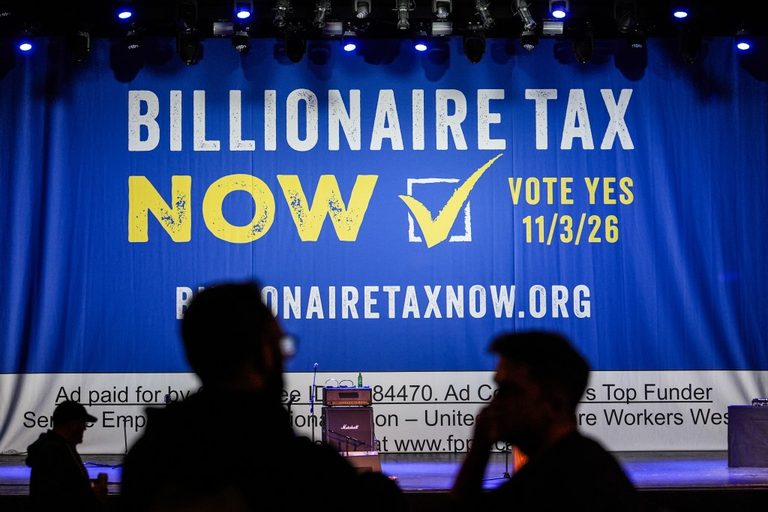
As California heads toward the November ballot, Proposition 40 – a one‑time 5% tax on individuals with a net worth over $1 billion – has become a flashpoint in state politics. The measure, backed by the Service Employees International Union‑United Healthcare Workers West, promises to raise billions for Medi‑Cal, the state’s low‑income health program, after recent federal cuts.
Local lawmakers largely refuse to comment
Voice of San Diego and CalMatters reached out to every San Diego‑area Democratic state legislator in July and September, using emails, phone calls, voicemails and texts. All Republican members publicly oppose the tax, but only one Democrat, State Senator Catherine Blakespear of Encinitas, has taken a clear stance – she opposes the state‑level tax and calls for a federal billionaire wealth tax instead.
Senator Blakespear said, “We need a federal billionaire wealth tax or we’ll disproportionately disadvantage California when our highest net‑worth individuals move out of state and pay no taxes here.”
Other Democrats still weighing the issue
Assemblymember David Alvarez (July 28) indicated he was still weighing the arguments, while Assemblymember Darshana Patel, Assemblymember LaShae Sharp‑Collins, Assemblymember Chris Ward and several others did not respond to repeated inquiries. Ward told reporters he would announce his position after Labor Day, but has not yet done so.
State Senator Akilah Weber Pierson’s staff directed reporters to campaign spokesperson Jeremy Addis‑Mills, who promised a follow‑up that never arrived. Senator Steve Padilla’s office referred the request to a campaign consultant who also failed to respond. Assemblymember Tasha Boerner’s campaign said she generally avoids taking positions on ballot measures, and her spokesperson confirmed she has not spoken on Prop 40.
Why the silence?
Political scientists suggest several reasons for the lack of public statements. UC Riverside professor Shaun Bowler noted Democrats are “stuck between a rock and a hard place”: the public dislikes billionaires, yet the tax may drive wealthy residents out of California, harming long‑term revenue.
UC San Diego professor Thad Kousser added that “there are good arguments on either side, so it’s reasonable that many people aren’t taking a position.” Meanwhile, San Diego State professor Brian Adams warned that some Democrats may be reluctant to upset wealthy donors who fund their campaigns.
Tech entrepreneurs, including Google co‑founder Sergey Brin, have already contributed millions to political committees seeking to defeat the measure, and Silicon Valley firms have poured nearly $10 million into state legislative races this year, according to the California Target Book.
Implications for voters
With every San Diego Democratic legislator except Senator Weber Pierson up for re‑election in November, the silence leaves voters to interpret the measure on their own. Proposition 40 would generate an estimated $100 billion in one‑time revenue, primarily earmarked for Medi‑Cal, but critics argue the tax is narrowly focused on healthcare and that California lacks a mechanism to tax assets directly.
Supporters contend the tax could prevent a further exodus of billionaires, while opponents fear it could accelerate that trend, as several high‑profile billionaires have already begun relocating businesses and personal assets to lower‑tax states.
As the campaign season intensifies, the lack of clear positions from San Diego’s Democratic delegation underscores the broader partisan divide over how best to address California’s fiscal challenges while preserving its economic competitiveness.
Original reporting: Voice of San Diego — read the source article.