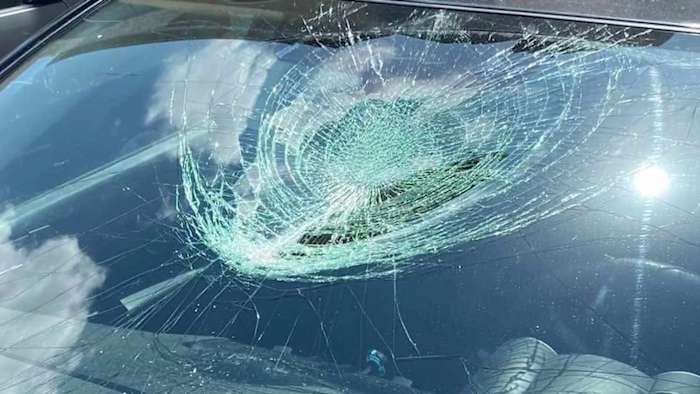
Margaret Starr, a San Antonio mother, is searching for answers after her daughter found the windshield of her parked car smashed in an apartment lot near Potranco Road; when KSAT met with Starr, she had not washed the car yet, and several footprints were still visible. Starr’s words—”What did we do?” and “I don’t wish this on nobody.”—capture the shock and frustration felt by families dealing with sudden vandalism. San Antonio Police Department spokeswoman Lizzandra Trevino confirmed SAPD is investigating whether the incident was random or targeted and reminded residents that vehicle-related crimes like this happen year-round.
The scene, as described by Starr, is simple and unsettling: a car left overnight in a communal lot and a windshield turned to rubble by someone who felt free to walk up, jump on it and walk away. “He just walked over there, walked up on the car, damaged the windshield and walked off,” Starr said, and her disbelief is obvious. Footprints remaining on the hood made the act feel even more personal to the family, as if the culprit left a signature before disappearing into the night.
For neighbors and anyone who parks in shared lots, that image is a reminder of how vulnerable a vehicle can be on a quiet stretch of asphalt. Property managers and residents often assume that parking inside an apartment complex equals safety, but isolated incidents erode that sense of security fast. The damage itself is expensive and disruptive, but the emotional toll—worry, anger and that helpless question “What did we do?”—lingers longer.
SAPD’s Lizzandra Trevino put the incident in context, saying plainly, “It happens year-round,” and adding that thieves and vandals are often hunting for anything that looks valuable. “A lot of times, what they’re looking for is anything valuable.” Those sentences explain motive more than method: vandals aren’t always out to destroy, they’re often searching for a payoff and will escalate to breaking glass if they think it helps. Trevino’s fuller explanation paints the usual pattern: “Most of the time, they’re going in there to try to steal the vehicle itself, and if they aren’t able to find anything of value … or if they aren’t able to start the vehicle and get it moving, then they’ll just leave,” Trevino said.
That pattern gives investigators clues to follow. Police will check nearby security cameras, comb for witnesses, and look for physical evidence like fingerprints or shoe prints that match the footprints Starr noticed. Officers also try to determine whether the act was opportunistic or part of a targeted series, and those early findings shape whether investigators treat the case as a neighborhood warning or an isolated mischief.
For families like Starr’s, the next steps are practical and immediate: document the damage, file a police report, and reach out to your insurance if the repair costs are high. Trevino advised anyone who experiences similar vandalism to call 911 promptly, because a quick response increases the chances of collecting usable evidence. Reporting matters even when it feels small—police records can reveal patterns and push for more patrols in hotspots.
Beyond police work, residents can take simple precautions without feeling like they live in fear: park in well-lit areas, consider motion-sensor lights for shared lots, and ask property managers about camera systems at entrances and over parking rows. Those measures won’t stop every act, but they raise the cost and risk for anyone considering walking up to a car at night. Community awareness—neighbors checking on one another and sharing suspicious activity—also adds a layer of deterrence that criminals notice.
Starr’s reaction—swift, raw and public—also highlights how people demand accountability and reassurance from local authorities. When a family posts pictures or speaks to the press, it’s not just about damage; it’s a call for better information and safer streets. If police identify a suspect or link the act to other incidents, it can give neighbors the concrete answers they want, but when cases stay unresolved the community is left in that uneasy waiting game Starr described: “It’s like we’re just a waiting game.”
The cost of a broken windshield is measurable in dollars, but the cost to peace of mind is quieter and harder to fix. For now, Starr and her daughter are dealing with the repairs and the shock, while SAPD continues to investigate and remind residents that these kinds of crimes are not rare. Calling 911, documenting damage, and working with your apartment management remain the steps people can take to push back when vandalism hits home.