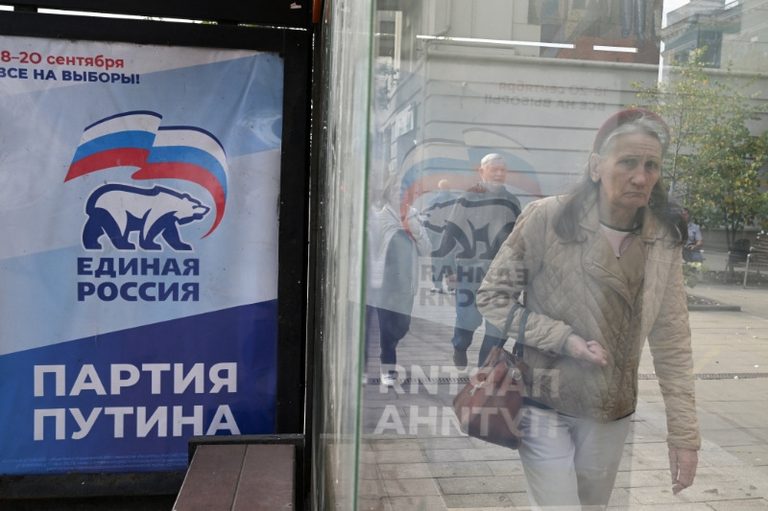
Russia will conduct its next parliamentary election from September 18 to 20, marking the first such vote since the country launched its full‑scale war in Ukraine in February 2022. All 450 seats in the State Duma, the lower house of the Federal Assembly, are up for election.
Election Mechanics
Voters will choose the entire Duma in two ways. Half of the seats (225) are filled through a nationwide party‑list ballot, while the remaining 225 are decided in single‑member constituencies. Candidates must win a simple plurality in each district to claim a seat.
United Russia’s Expected Dominance
The ruling United Russia party, backed by President Vladimir Putin, is widely projected to retain control. A state‑run poll by VTsIOM released at the end of August showed United Russia with 37% support among respondents, far ahead of the Communist Party’s 11.6%.
United Russia currently holds 310 seats in the Duma and needs at least 300 to preserve its supermajority, which allows it to pass constitutional amendments without support from other parties.
Limited Opposition Landscape
Four other parties are expected to re‑enter the Duma, including the Communist Party and the ultra‑nationalist Liberal Democratic Party of Russia. Both parties have generally supported the war effort and tend to vote in line with United Russia on key issues.
The liberal Yabloko party, the only registered party that openly opposes the war, has been barred from the party‑list ballot by the Supreme Court. Some Yabloko candidates are still running in single‑seat districts, but their chances of winning appear slim.
Additional opposition figures have been excluded after being designated as “foreign agents,” a label that restricts their political activity.
Observer Access and International Reaction
The independent election watchdog Golos, which previously criticized Russian elections, was forced to close in 2025 after sustained pressure from authorities. Moscow has also declined to invite international monitors from the Organization for Security and Co‑operation in Europe (OSCE). The OSCE has warned that the lack of observation reflects a broader pattern of Russian government disregard for transparency, democratic accountability, and the rule of law.
Russian officials have rejected external criticism, stating that the vote is being conducted in accordance with domestic law and accusing Western nations of attempting to undermine the election.
Voting in Occupied Territories
The election will be held not only in the Russian Federation proper but also in Crimea, which Russia annexed from Ukraine in 2014, and in the Russian‑controlled parts of the Donetsk, Luhansk, Zaporizhzhia and Kherson regions. Authorities say early voting has begun in some areas for security reasons.
What This Means for Russia’s Political Landscape
If United Russia secures the required supermajority, it will retain the ability to push through constitutional changes without needing support from other parties. This outcome would further consolidate power around President Putin’s administration and limit the space for dissenting voices within the formal political system.
Analysts note that the absence of credible independent monitoring and the systematic exclusion of genuine opposition parties raise questions about the election’s competitiveness and legitimacy. Nonetheless, the scheduled vote proceeds as a key component of Russia’s political calendar, shaping the composition of the legislature that will guide policy for the next five years.
Original reporting: Appleton, WI News Feed (HLL/CB) — read the source article.